From Cairo to Petra: An 8-Day Egypt & Jordan Adventure
Good to know
- Duration 8 days
- Group size Up to 10
- Languages English, France, Germany, Italy
- Departs Everyday
- Meeting point Cairo
Overview
Discover the remarkable history and landscapes of Egypt and Jordan on an unforgettable eight-day journey with Book Egypt Travel. Explore the ancient wonders of Giza and Cairo, experience Alexandriaâs Mediterranean charm, and continue to Jordan to see Petra, Madaba, and the dramatic desert scenery of Wadi Rum.
With comfortable accommodation, private air-conditioned transportation, international flights, and knowledgeable local guides, you can enjoy each destination with smooth, well-organized service.
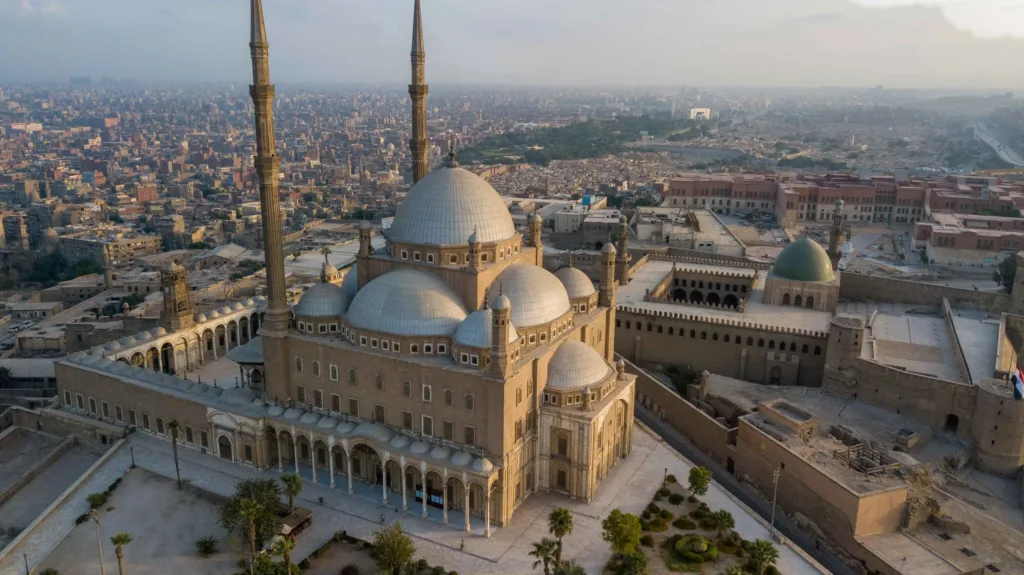
In Egypt, visit the Giza Pyramids, the Egyptian Museum, and the Step Pyramid of Saqqara. In Cairo, explore the Citadel of Salah El-Din, Khan El Khalili Bazaar, the Amr Ibn Al-As Mosque, the Hanging Church, and the National Museum of Egyptian Civilization. In Alexandria, discover the Library of Alexandria, Qaitbay Citadel, and the Catacombs of Kom El Shoqafa.
In Jordan, admire the mosaics of Madaba, visit Mount Nebo, and relax beside the Dead Sea. Then journey to Petra, where the Siq leads to the famous Treasury and a wealth of Nabataean monuments, including the Royal Tombs, Roman Theatre, Qasr al-Bint, and the Nabataean Temple. Complete your adventure amid the striking desert landscapes of Wadi Rum, including Lawrence Spring.
Join Book Egypt Travel for a memorable journey through some of the most captivating historical sites and landscapes in Egypt and Jordan.
Highlights
- Great Pyramids of Giza
- Great Sphinx
- Egyptian Museum
- Step Pyramid of Djoser at Saqqara
- Citadel of Salah El-Din
- Khan El Khalili Bazaar
- National Museum of Egyptian Civilization
- Library of Alexandria
- Qaitbay Citadel
- Catacombs of Kom El Shoqafa
- St. George’s Church in Madaba
- Mount Nebo
- Dead Sea
- The Siq at Petra
- The Treasury at Petra
- Royal Tombs of Petra
- Roman Theatre at Petra
- Wadi Rum desert
What’s included
Included
- Meet-and-assist service at the airports
- Tours and transfers in modern, air-conditioned vehicles
- Entrance fees to all attractions listed in the itinerary
- English-speaking tour guides during sightseeing tours
- Meals as specified in the itinerary
- Four nights’ accommodation at a 5-star hotel in Cairo, including breakfast
- Three nights’ accommodation at a 5-star hotel in Amman, including breakfast
- Shared day tours and transfers with other travelers
- All service charges and taxes
Not included
- International airfare
- Entry visa to Egypt
- Optional tours
- Personal expenses
- Tips and gratuities
Day by day
-
01 Day 1 – Arrival in Cairo

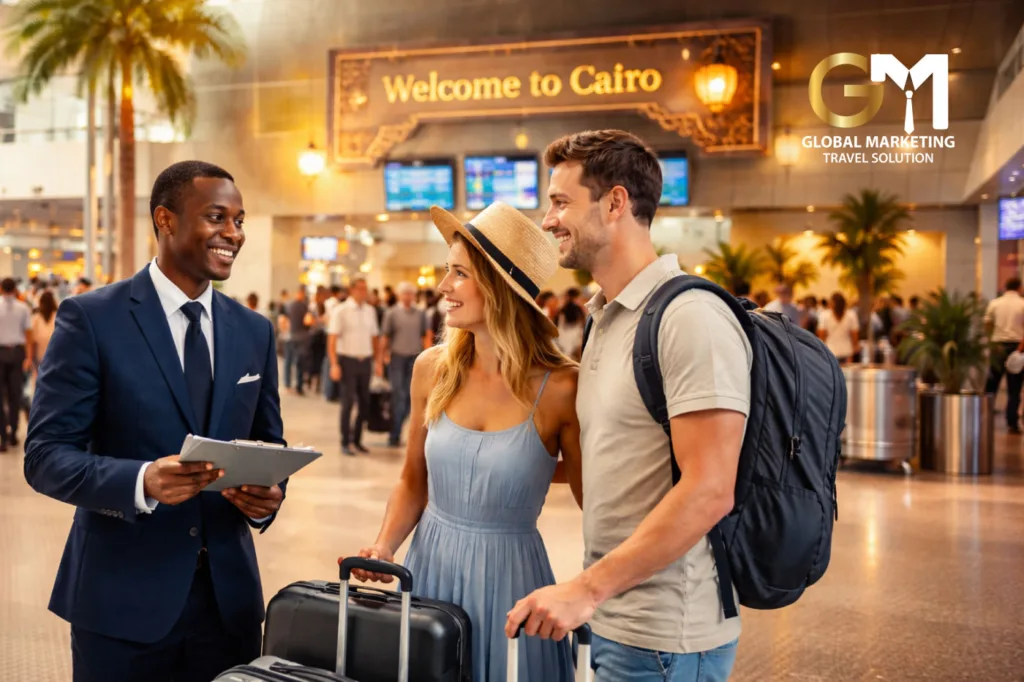
Upon arrival at Cairo International Airport, a Book Egypt Travel representative will meet you and assist with the arrival formalities. You will then meet your guide and transfer by air-conditioned vehicle to your hotel in Cairo. After check-in, take time to relax.
Dinner Cruise on the Nile
In the evening, enjoy dinner aboard a Nile cruise, with a meal and live entertainment featuring traditional Egyptian performances. After the cruise, return to your hotel for the night.
-
02 Day 2 – Giza Pyramids, Grand Egyptian Museum.

After breakfast, meet your guide and travel to the Giza Plateau to explore some of Egypt’s most famous monuments.
Giza Pyramids Complex
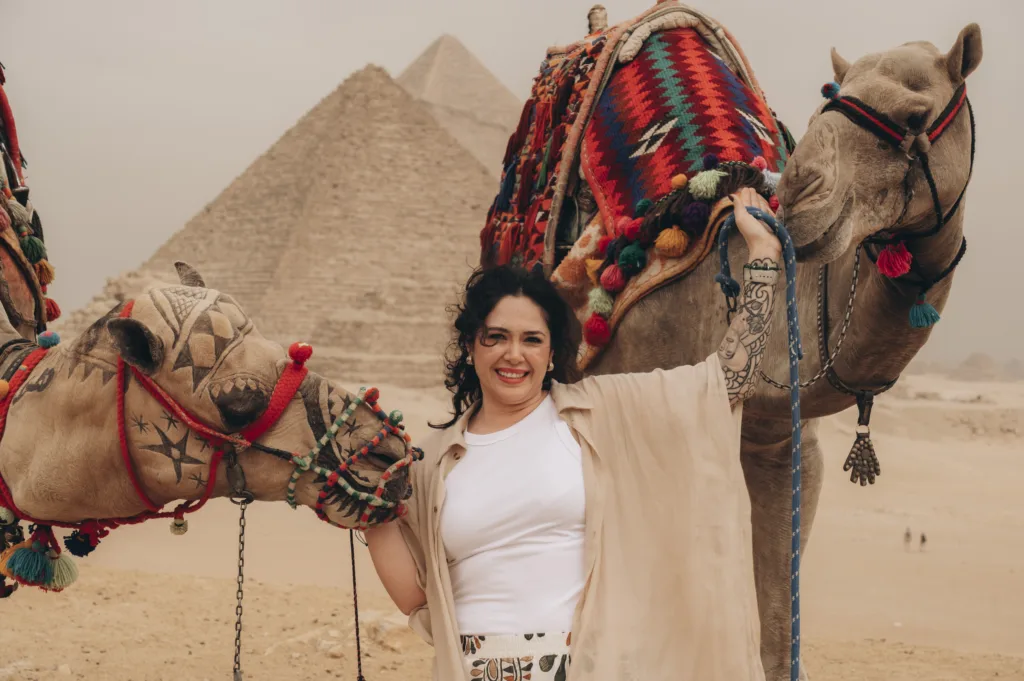
The Giza Plateau is home to the pyramids built for the kings of Egypt’s Fourth Dynasty. The site offers a remarkable look at the ancient Egyptians’ funerary beliefs and architectural skill.
The Great Pyramid of Khufu
Built as the tomb of Pharaoh Khufu, the Great Pyramid is the largest pyramid at Giza and the only surviving wonder of the ancient world. Its immense scale and precise construction have fascinated visitors for thousands of years.
The Great Sphinx
The Sphinx is a monumental statue with a lion’s body and a human head, traditionally identified with Pharaoh Khafre. It stands near the pyramid complex and has become one of Egypt’s most recognizable landmarks.
The Valley Temple
This well-preserved temple was part of Khafre’s pyramid complex. It is associated with ancient royal funerary rituals and is notable for its massive stone blocks and granite features.
Enjoy lunch at a local restaurant before continuing to the Grand Egyptian Museum.
Grand Egyptian Museum
Located near the Giza Plateau, the Grand Egyptian Museum presents artifacts from across Egypt’s history. Its galleries include monumental statues, objects from the tomb of Tutankhamun, and exhibits that introduce visitors to ancient Egyptian culture.
Return to your Cairo hotel.
-
03 Day 3 – Alexandria Sightseeing

After breakfast, travel by air-conditioned vehicle to Alexandria, Egypt’s historic Mediterranean city.
Qaitbay Citadel
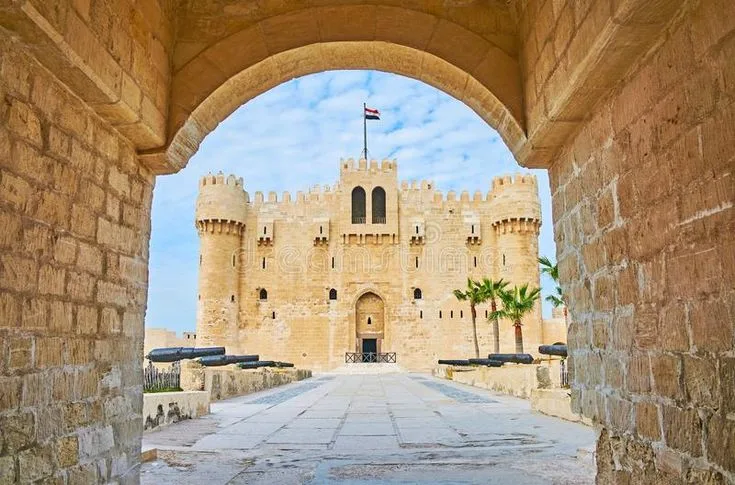
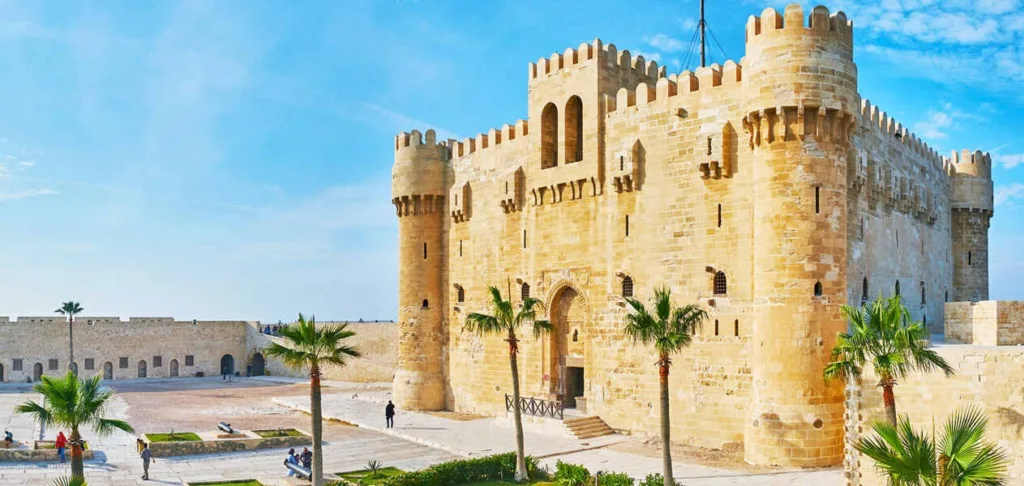
Built in the fifteenth century on Alexandria’s eastern harbor, Qaitbay Citadel is a coastal fortress with views over the Mediterranean. It stands on the site traditionally associated with the ancient Lighthouse of Alexandria.
Library of Alexandria
The modern Library of Alexandria opened in 2002 as a tribute to the ancient library. Its distinctive architecture houses a major collection of books and cultural facilities, making it one of the city’s leading landmarks.
Enjoy lunch at a local restaurant, then continue exploring Alexandria.
Pompey’s Pillar
This tall Roman column stands within the archaeological remains of the Serapeum. Erected in the late third century AD, it is one of Alexandria’s most prominent surviving monuments from the Roman period.
Catacombs of Kom El Shoqafa
These underground tombs date mainly to the Roman period and combine Egyptian, Greek, and Roman artistic styles. Their chambers and carved decorations offer a glimpse into Alexandria’s multicultural history.
After sightseeing, return to Cairo.
-
04 Day 4 – Civilization Museum and Historic Cairo

After breakfast, visit the Civilization Museum,
The National Museum of Egyptian Civilization
Visit the National Museum of Egyptian Civilization, home to artifacts that trace Egypt’s story from prehistoric times to the modern era. The museum also displays the Royal Mummies, offering a close look at some of Egypt’s most famous ancient rulers.
Enjoy lunch at a local restaurant, then explore historic Cairo.
The Hanging Church
Also known as the Church of the Virgin Mary, the Hanging Church is one of Cairo’s best-known Coptic churches. It is built above the southern gate of the Roman Fortress of Babylon, which gives the church its name.
Ben Ezra Synagogue
Ben Ezra is one of the most significant historic synagogues in Cairo. It is associated with the discovery of the Cairo Geniza, a large collection of Jewish manuscripts and documents.
Khan El Khalili Bazaar
Khan El Khalili is a lively historic market with shops selling souvenirs, jewelry, textiles, spices, and other goods. Its narrow lanes and traditional cafés make it a memorable place to experience Cairo’s atmosphere.
Return to your hotel.
-
05 Day 5 – Cairo to Amman

After breakfast, check out and transfer to Cairo International Airport for your flight to Amman. Upon arrival at Queen Alia International Airport, a representative will meet you and assist with arrival procedures. Transfer to your hotel in Amman and check in.
-
06 Day 6 – Madaba, Mount Nebo, and the Dead Sea

After breakfast, meet your driver and travel to Madaba.
St. George’s Church
St. George’s Greek Orthodox Church is known for its sixth-century mosaic map of the Holy Land. The map depicts biblical locations and is an important example of early Christian mosaic art.
Continue to Mount Nebo.
Mount Nebo
Mount Nebo is a hilltop site traditionally associated with the biblical story of Moses. Visitors come for its religious significance and its panoramic views across the Jordan Valley and, on clear days, toward the Dead Sea.
Continue to the Dead Sea.
The Dead Sea
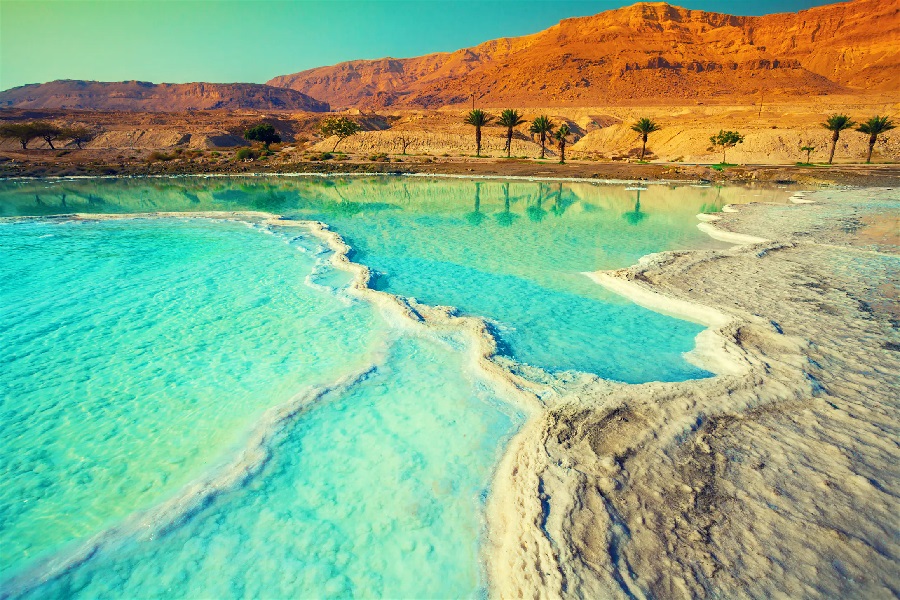
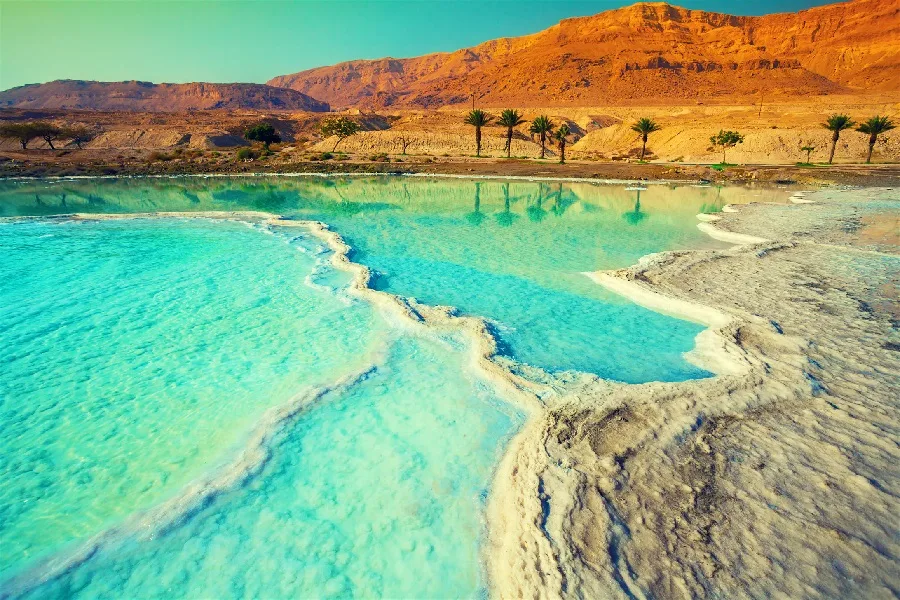
The Dead Sea lies at the lowest elevation on Earth’s surface and is known for its highly saline water. Visitors can relax by the shore and experience floating in the water, conditions permitting.
Enjoy lunch at a local restaurant, then continue to Petra and check in to your hotel.
-
07 Day 7 – Petra and Wadi Rum

After breakfast and check-out, explore Petra with a local guide.
Petra
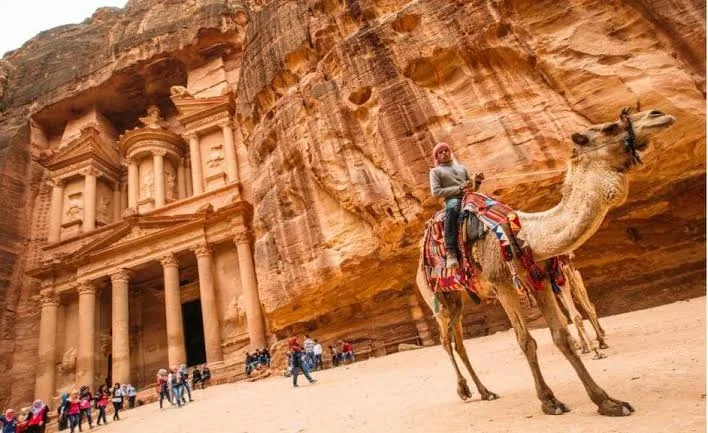
Petra was the capital of the Nabataean Kingdom and is renowned for its buildings carved into rose-colored sandstone. The ancient city’s monuments, tombs, and water systems reflect the skill and influence of the Nabataeans.
The Siq
The Siq is a narrow, winding gorge that forms the main approach to Petra’s central area. Its high rock walls create a dramatic entrance to the ancient city.
Al-Khazneh (The Treasury)
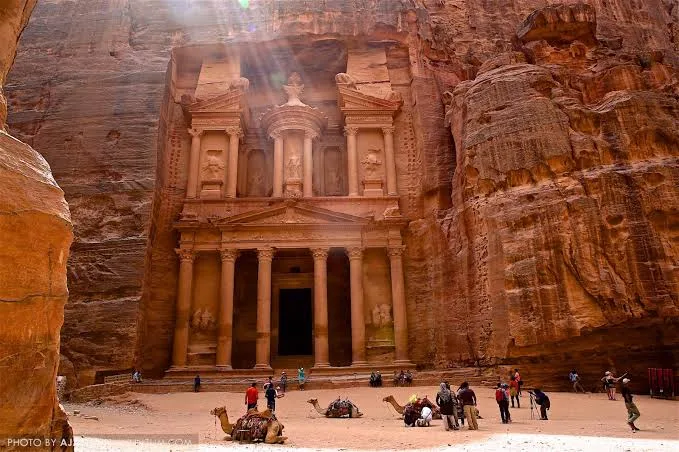
The Treasury is Petra’s best-known monument, with an elaborate façade carved directly into the sandstone cliff. Despite its name, it is generally understood to have served as a royal tomb or temple.
The Royal Tombs
Carved into Petra’s eastern cliffs, the Royal Tombs are a group of large burial façades. Their varied designs and weathered colors make them some of the city’s most striking monuments.
Roman Theatre
The theatre was originally built by the Nabataeans and later altered during the Roman period. Carved into the rock, it once accommodated a large audience for performances and gatherings.
Qasr al-Bint
Qasr al-Bint is one of Petra’s major freestanding temples. Its surviving stone structure offers an impression of the religious architecture that once stood in the city center.
After your Petra visit, travel to Wadi Rum for dinner at a Bedouin camp.
Wadi Rum
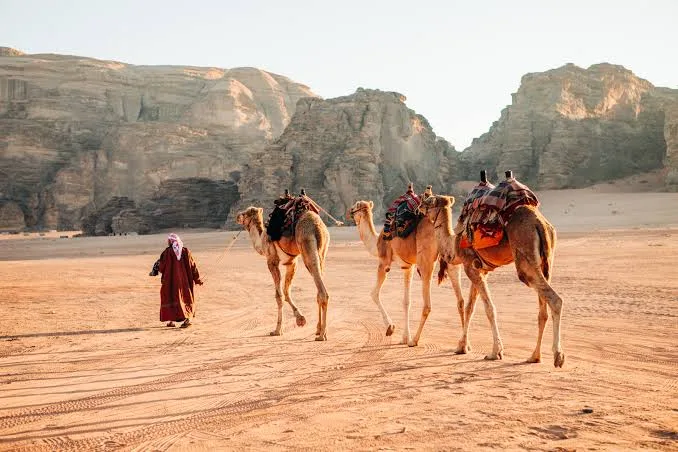
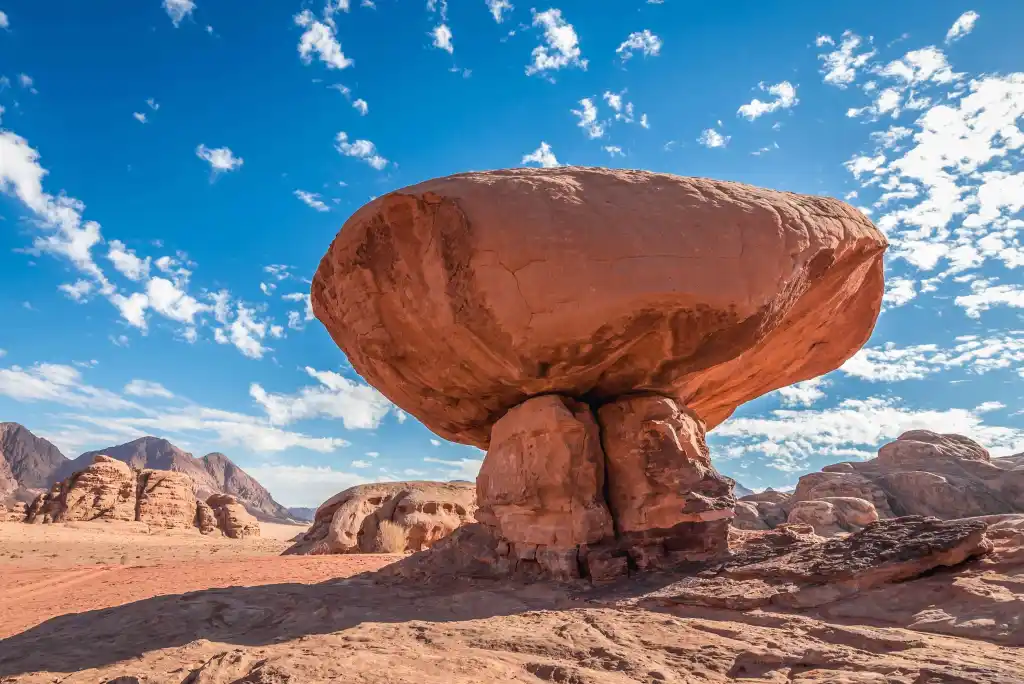
Wadi Rum is a vast desert landscape of red sand, sandstone mountains, and natural rock formations. Its scenery and archaeological remains reflect a long history of human presence in the region.
-
08 Day 8 – Wadi Rum Safari and Departure

After breakfast at the camp, set out on a 4–5-hour 4x4 safari through Wadi Rum.
Um Frouth Rock Bridge
Um Frouth is a natural rock arch that visitors can climb for views across the desert. The ascent involves uneven terrain and may not suit everyone.
Little Bridge
This smaller natural rock arch is a distinctive formation in Wadi Rum. It offers a short stop to admire the surrounding desert scenery.
Burdah Arch
Burdah Arch is a high natural rock bridge set among Wadi Rum’s mountains. It is a well-known landmark; reaching it on foot involves a strenuous climb, so the safari route and access depend on conditions and the tour arrangement.
Nabataean Temple
The remains of the Nabataean Temple provide evidence of the region’s historical role along ancient trade routes. Inscriptions and stonework connect Wadi Rum to the wider Nabataean world.
Lawrence Spring
Lawrence Spring is a water source on the slopes above Wadi Rum. It is associated with T. E. Lawrence, who travelled through the region during the Arab Revolt.
Khazali Canyon
Khazali Canyon is a narrow cleft in the rock known for ancient inscriptions and carvings on its walls. The markings reflect the presence of communities and travelers in the area over many centuries.
After the safari, transfer to Amman or Queen Alia International Airport for departure.
Availability
This tour departs on the following days. Send us your preferred date and we will confirm availability for you.
- Everyday
Room & Cabin Occupancy and Single Supplement
- All tour prices are based on two guests sharing a twin or double room/cabin, unless otherwise stated.
- Guests requesting a private room or private cabin will be required to pay a single supplement.
- For Nile cruises, the single-cabin supplement is normally an additional 70% of the per-person twin-sharing rate.
- Hotel single-room supplements vary depending on the hotel, travel dates, availability, and season.
- Single rooms and cabins are subject to availability and final confirmation.
- The exact single supplement will be clearly stated in your quotation and booking confirmation.
- If one traveler cancels and the remaining guest occupies the room or cabin alone, the applicable single supplement may be added to the booking.
By confirming your booking, you acknowledge and accept the applicable room/cabin occupancy and single-supplement conditions.
Read the full Booking, Payment & Cancellation PolicySingle supplements may vary by supplier and are always confirmed before payment.
Frequently asked questions
What is the typical duration of a Nile River cruise in Egypt?
The typical Nile River cruise duration ranges from 3 to 7 nights, depending on your chosen itinerary. The most popular options are:
- 3 Nights / 4 Days from Aswan to Luxor
- 4 Nights / 5 Days from Luxor to Aswan
- 7 Nights / 8 Days for a round-trip cruise between Luxor and Aswan
You can also find longer Nile cruise packages that include additional destinations and more leisure time. Whether you want a short cultural escape or a full week of luxurious exploration, there’s a Nile cruise perfectly suited to your travel needs.
What Is the Weather Like in Egypt?
Egypt enjoys a sunny, dry climate all year round, making it a popular destination for travel. Summer (May to September) is hot, especially in southern cities like Luxor and Aswan, with highs reaching 37°C. Winter (December to February) is cooler and more comfortable for sightseeing, with daytime temperatures around 23°C and cooler nights. Coastal destinations such as Hurghada and Sharm El Sheikh have moderate weather year-round, making them ideal for both winter and summer holidays. For the most pleasant weather, the best time to visit Egypt is during spring and autumn.
What Should I Wear on a Nile Cruise in Egypt?
When taking a Nile River Cruise in Egypt, it’s essential to dress for both the warm climate and the local culture. Lightweight, breathable clothing is ideal for daytime comfort, but modest attire is recommended, especially during shore excursions. Women should avoid short shorts, sheer clothing, or swimwear when off the cruise, and both men and women should cover their legs and upper arms when visiting mosques or religious sites. Swimwear is acceptable on board the cruise ship, but not appropriate in public spaces on land. Dressing respectfully ensures a smooth and culturally sensitive travel experience.
What Is the Best Time for a Nile River Cruise in Egypt?
The best time to enjoy a Nile River Cruise in Egypt is between late October and mid-April, when the weather is pleasantly mild and ideal for sightseeing. This period offers the most comfortable climate for exploring ancient temples and cruising along the Nile without the intense summer heat. However, keep in mind that Christmas and Easter are considered peak seasons, with higher prices and increased demand. To enjoy a magical and affordable Nile cruise experience, it's best to plan around these holidays—and with our tailored packages, you’ll always get the best value, no matter the season.
What Are the Best Prices for a Nile River Cruise in Egypt?
Sailing the Nile River is one of Egypt’s most unforgettable travel experiences, and there are a variety of Nile cruise options to suit every budget. The most popular and recommended categories are 5-star and 5-star High Deluxe Nile cruises, offering luxurious comfort, guided tours, and top-tier amenities. Prices vary depending on the cruise type, facilities, and travel season—especially during peak times like Christmas and Easter when rates are higher. For the best Nile River cruise prices and exclusive deals, explore our handpicked packages tailored to give you the perfect balance of quality and value.
What Are the Types of Egypt’s Nile River Cruises?
There are two main types of Nile River cruises in Egypt to choose from, depending on your travel style and preferences. The first is the private Dahabiya Nile cruise, a traditional sailboat offering an intimate experience with around 8 to 10 luxurious cabins, ideal for small groups or couples seeking privacy and elegance. The second and more common option is the standard large Nile cruise ship, which typically features 100 to 150 cabins, modern amenities, entertainment, and guided excursions. Both options provide unforgettable journeys along the Nile, with comfort and cultural discovery at their core.
What Are the Facilities on a Nile River Cruise?
A luxury Nile River cruise in Egypt is essentially a fully equipped floating hotel, offering all the comfort and amenities you would expect from a 5-star resort. Onboard facilities typically include a sun deck with panoramic views, an indoor swimming pool, spa and beauty center, restaurant, lounge bar, discotheque, and even gift shops. Guests can also enjoy services like laundry, a safe deposit box, and a variety of entertainment options, ensuring a relaxing and enjoyable journey as you cruise between Egypt’s most iconic ancient landmarks.
What Are the Top Attractions to Visit on a Nile River Cruise?
A Nile River cruise between Luxor and Aswan (or vice versa) offers travelers the chance to explore some of Egypt’s most iconic ancient attractions. Highlights include the magnificent Karnak Temple Complex, the royal tombs in the Valley of the Kings, the elegant Temple of Hatshepsut, and the well-preserved Temple of Edfu dedicated to Horus. You’ll also visit the unique Kom Ombo Temple, the enchanting Philae Temple of Isis, and the impressive Unfinished Obelisk in Aswan. These landmarks reflect Egypt’s glorious past and make a Nile cruise a truly unforgettable journey through history.
What Are the Best Activities to Do in Egypt?
Egypt offers an incredible variety of activities for every traveler. One of the top experiences is sailing on a Nile River Cruise between Luxor and Aswan, exploring ancient temples along the way. For breathtaking views, enjoy a hot air balloon ride over Luxor or scenic aerial tours by plane. Dive into Egypt’s rich flavors by sampling authentic Egyptian cuisine and shopping in the bustling streets of Old Cairo. For adventure lovers, snorkeling and diving in the Red Sea—especially in resorts like Hurghada—offer a glimpse into vibrant marine life. Don’t miss the chance to embark on a desert safari in the Western Desert, where you can experience the magic of Egypt’s landscapes under star-filled skies.
What Are Egypt’s Festivals and Public Holidays?
Egypt celebrates a variety of public holidays and festivals, both religious and national. Among the most significant are the holy month of Ramadan, a time of fasting and spiritual reflection for Muslims, which ends with the joyful celebration of Eid Al-Fitr. Other major holidays include Eid Al-Adha, Islamic New Year, and Mawlid Al-Nabi (the Prophet’s birthday). On the national and cultural side, Christmas (January 7), New Year’s Eve, Revolution Day (July 23), and Sinai Liberation Day (April 25) are widely observed. These festivals offer visitors a rich cultural experience and a deeper look into Egypt’s heritage.
Is it safe to go on a tour in Egypt right now?
Egypt offers a wide range of tours to suit every travel style, interest, and budget. Some of the most popular options include a 6-day tour covering Cairo, Luxor, Aswan, and Abu Simbel; an 8-day package that explores Cairo, Luxor, Abu Simbel, and Hurghada; a 9-day journey combining Cairo, a Nile Cruise, and Alexandria; and a 10-day tour featuring Cairo, Aswan, Luxor, and Hurghada. Whether you're drawn to ancient history, cultural landmarks, or relaxing by the Red Sea, there's a tour perfectly tailored for you.
How Much a trip to Egypt costs?
Tour prices in Egypt vary based on length, comfort, and inclusions. Budget tours start around $600–$900 USD for a week, mid-range packages range from $1,000–$1,800, and luxury tours can exceed $2,000 USD. Prices usually include hotels, guided tours, and domestic transport, but not international flights.
What are the visa requirements for Egypt?
To visit Egypt, most travelers require a visa. Citizens from over 180 countries, including the U.S., UK, Canada, and EU nations, can apply for a 30-day tourist visa. This can be obtained either online via Egypt’s official eVisa portal or on arrival at Egyptian airports for a fee of approximately $25 USD. However, travelers heading to Sharm El Sheikh, Dahab, Nuweiba, or Taba resorts can enter visa-free for up to 15 days, here’s the www.visa2egypt.gov.eg
How long should my passport be valid to travel to Egypt?
Passport validity: Ensure your passport is valid for at least 6 months from your intended arrival date in Egypt.
What do I need to pack for my tour to Egypt?
You will need to pack lightweight, breathable clothing, a hat, sunglasses, sunscreen, comfortable walking shoes, a reusable water bottle, a scarf or shawl (for sun and temple visits), and a basic first aid kit. Don’t forget your passport, travel documents, and any personal medications.
What is the best time to visit Egypt?
The best time to visit Egypt is during the cooler months from October to April, when temperatures are mild and comfortable for sightseeing. Avoid the peak summer months (June to August) as it can get extremely hot, especially in desert and southern regions.
How is the summer time weather in Egypt?
Summer in Egypt (June to August) is very hot, with temperatures often exceeding 40°C (104°F), especially in desert areas and southern cities like Luxor and Aswan. Coastal areas like Alexandria and the Red Sea are a bit cooler with sea breezes.
Real Reviews, Real Travellers
Book Egypt Travel Reviews
Verified guest reviews from across the web — the words are exactly what our travellers wrote.
Explore more