




4 Days from Abu Simbel to Aswan with Nubian Sea
Overview
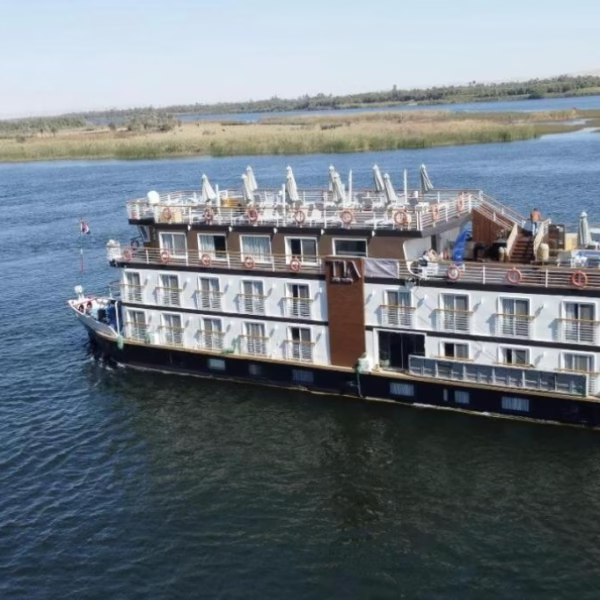
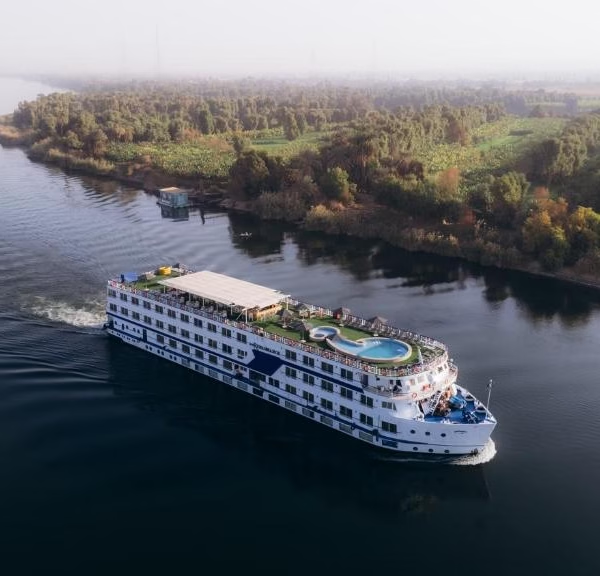
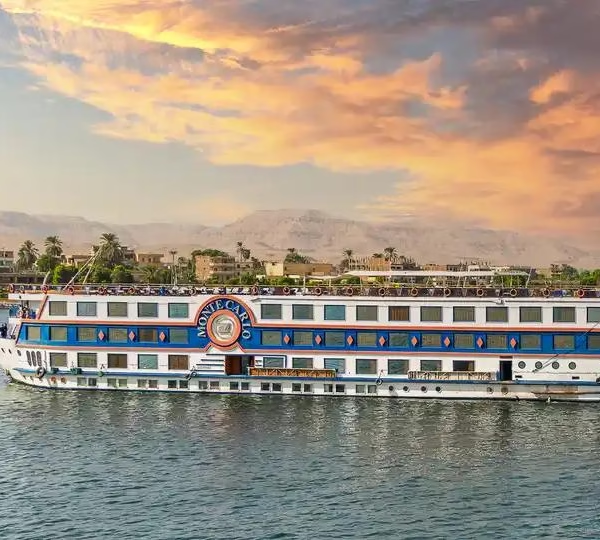
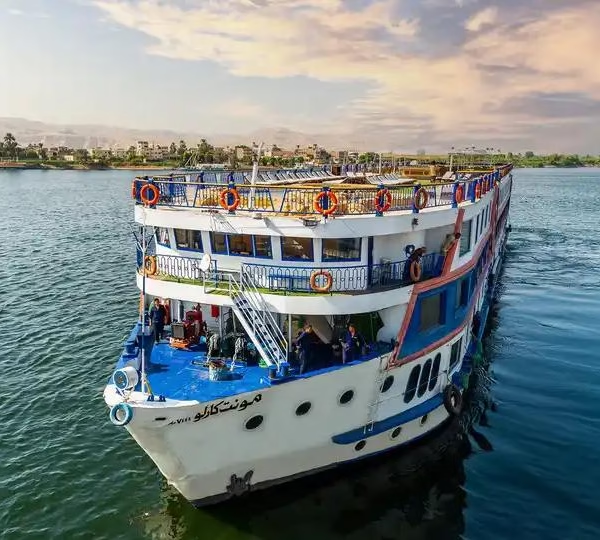
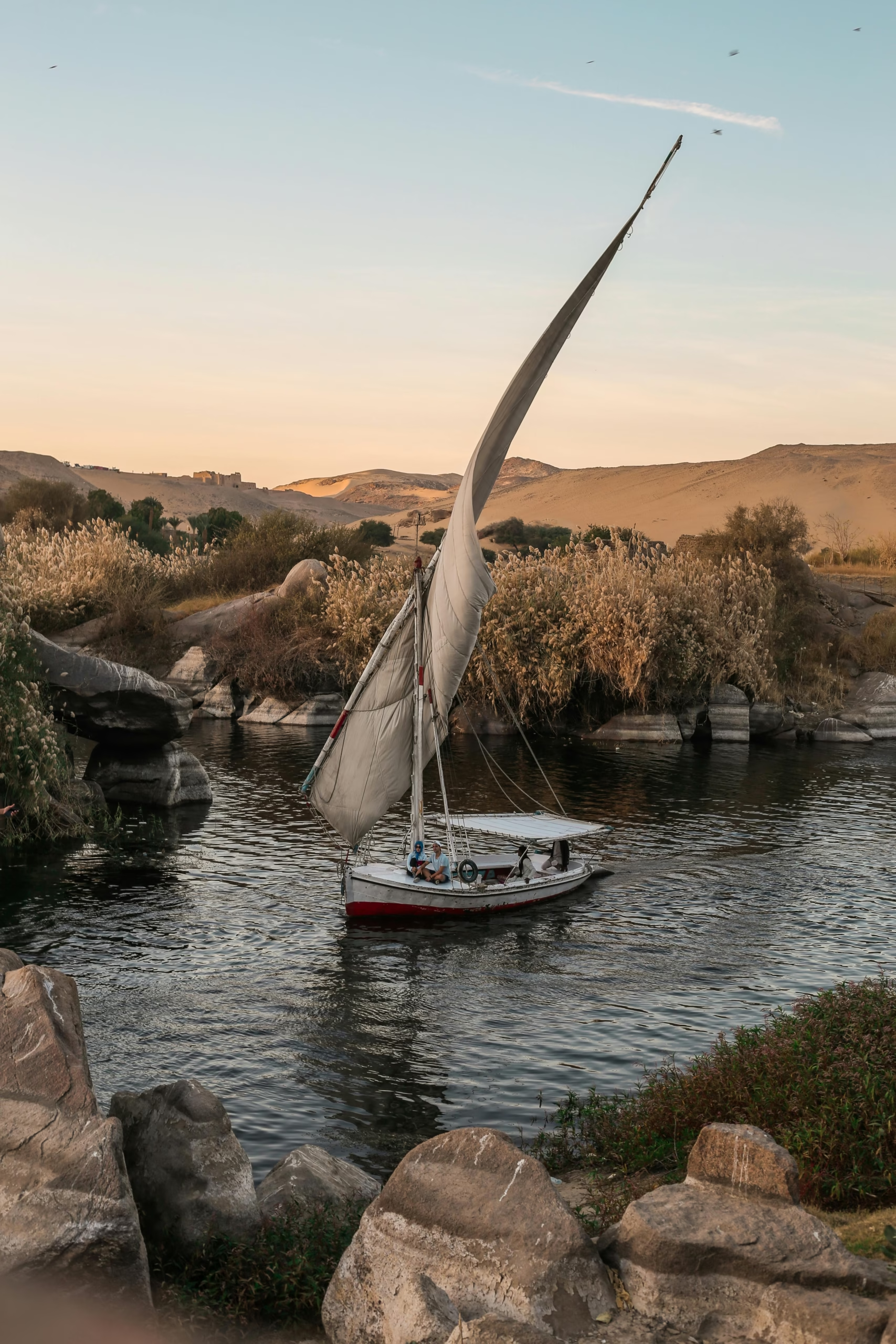
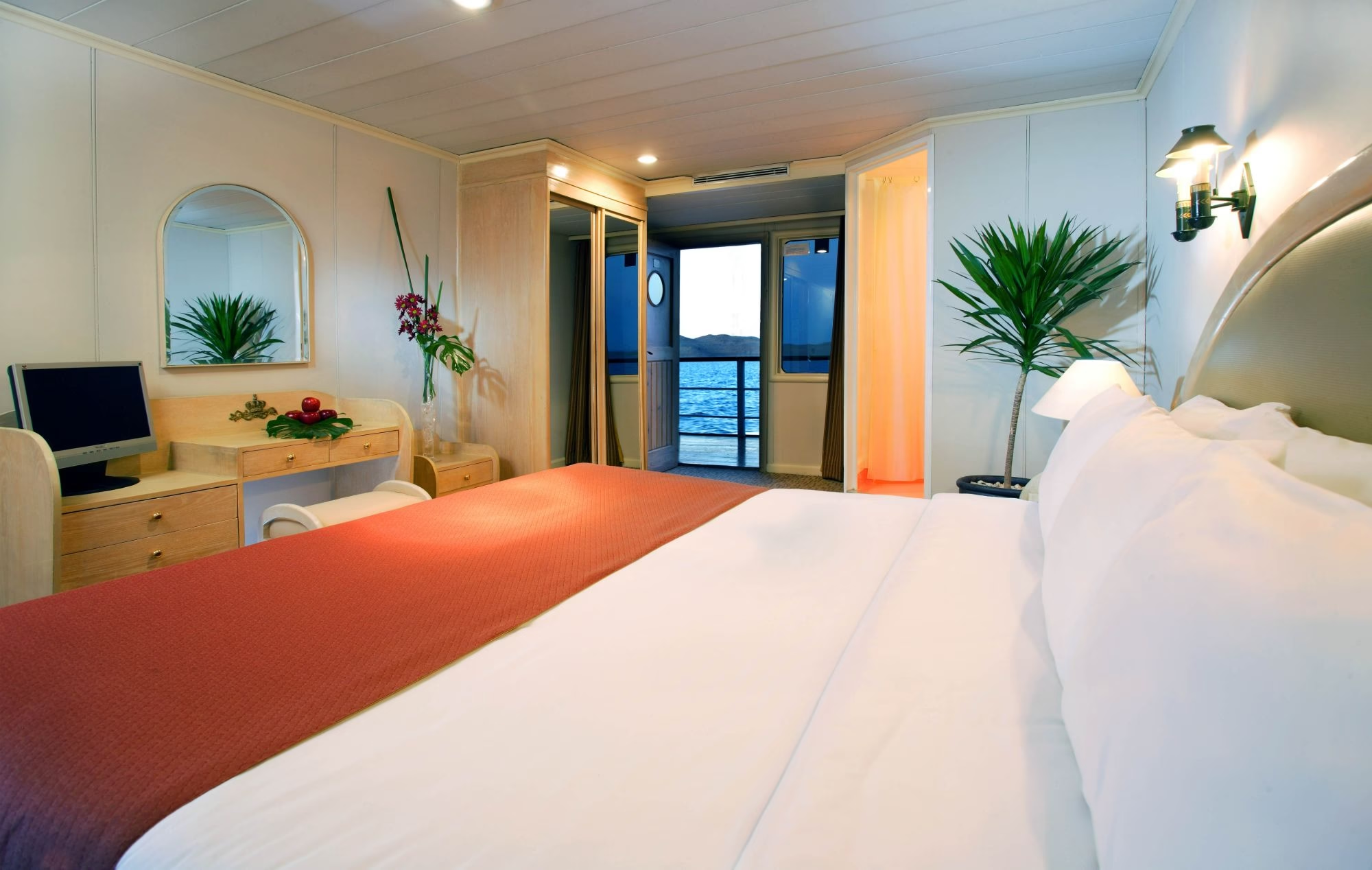
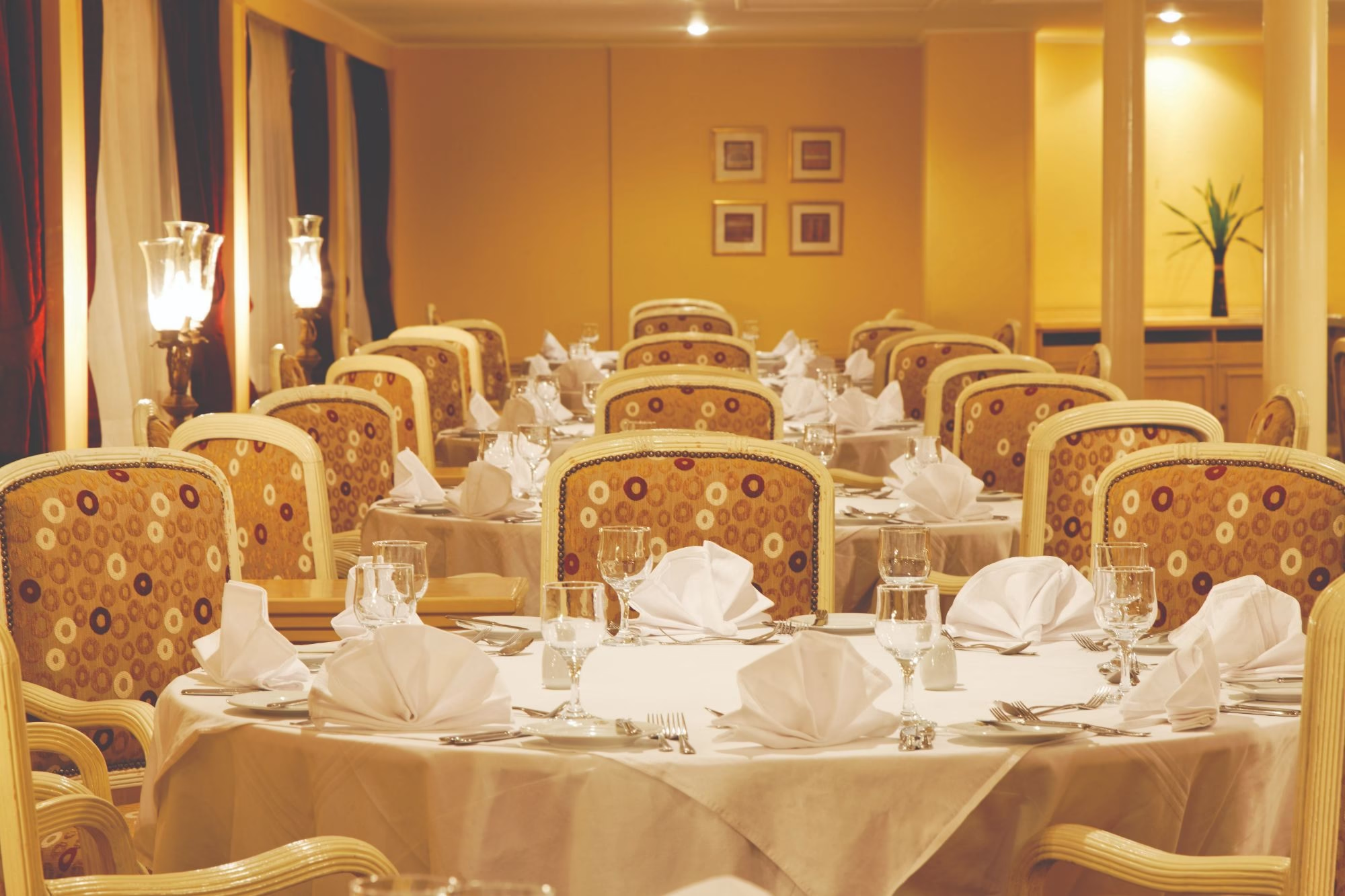
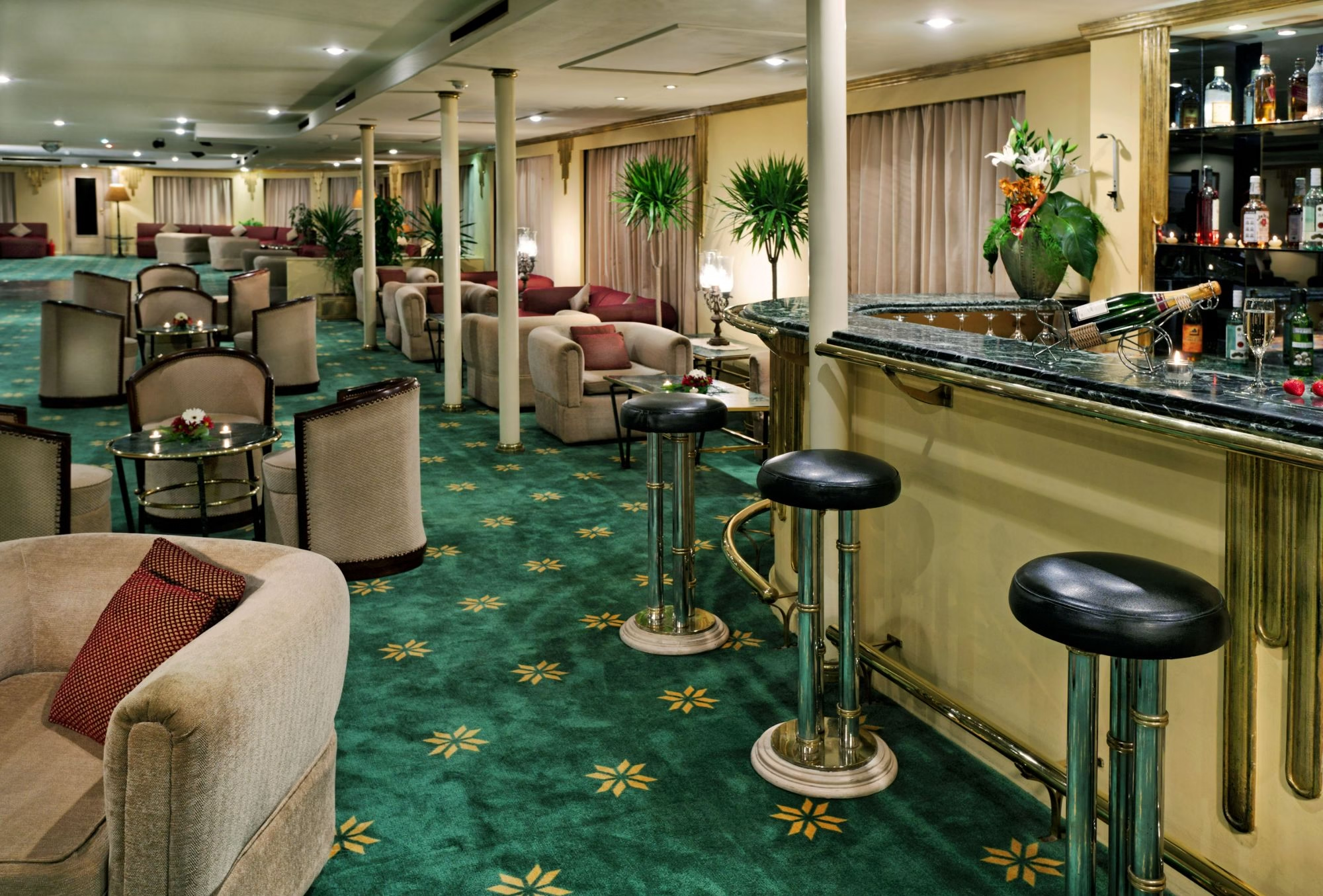
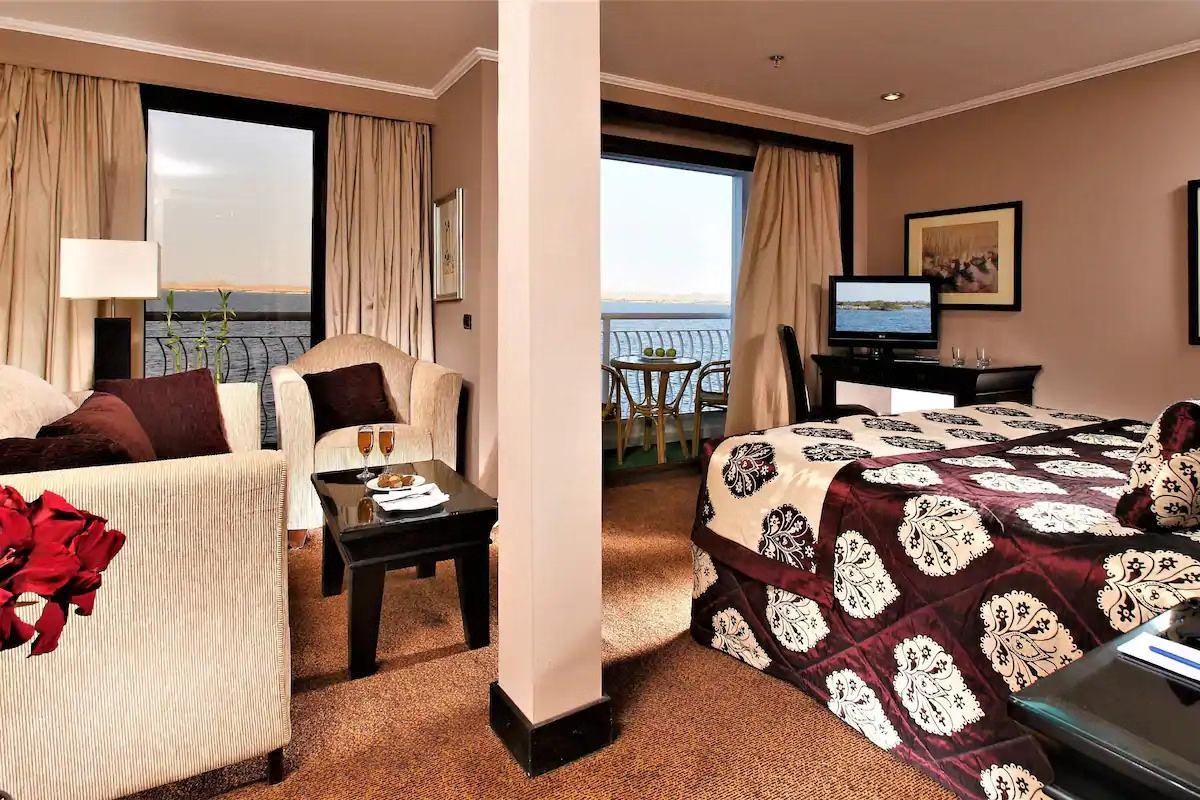
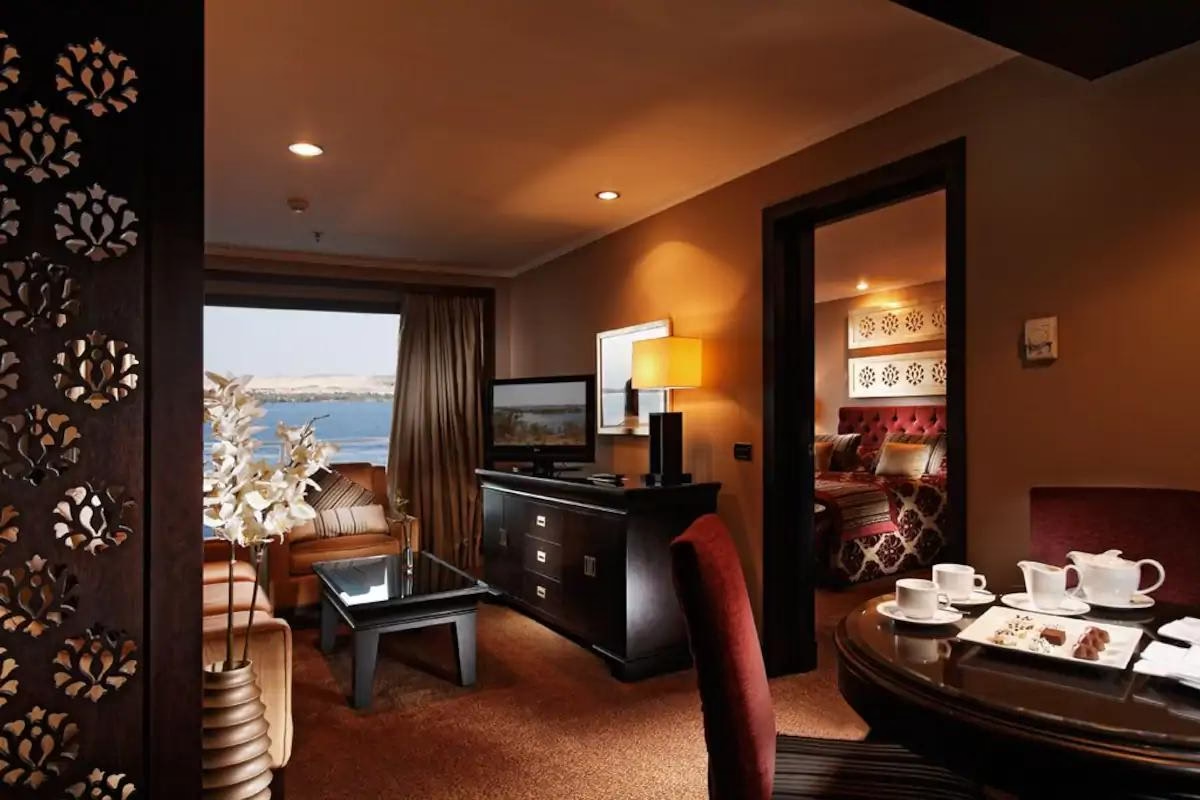
A luxurious 4 Days from Abu Simbel to Aswan with Nubian Sea with Book Egypt Travel, sails from the iconic temples of Abu Simbel to the tranquil shores of Aswan. This exceptional Lake Nasser cruise blends modern comfort with the timeless magic of ancient Egypt.
In addition, it offers breathtaking views, expertly guided tours, and seamless service throughout your voyage. As you glide across the serene waters of Lake Nasser, you’ll explore majestic temples and marvel at dramatic desert landscapes. Moreover, you will immerse yourself in the rich cultural heritage that defines southern Egypt.
This is perfect for travelers seeking an unforgettable and immersive experience. This Lake Nasser cruise with Book Egypt Travel is more than a holiday. Instead, it’s a journey through history, where every monument reveals a story. In fact, every moment connects you to the wonders of ancient Egypt in 4 Days from Abu Simbel to Aswan with Nubian Sea.
Included/Exclude
- 4 Days Lake Nasser at a 5-star Nile Cruise
- Private Egyptologist tour guide.
- All transfers in air-conditioned vehicles.
- All entrance fees to the mentioned attractions.
- All service charges and taxes.
- The flight costs (We are happy to book the flights for you).
- Entry visa.
- Sightseeing not included in the program.
- Excursion to Abu Simbel (optionally bookable).
- Tipping.
Tour Plan
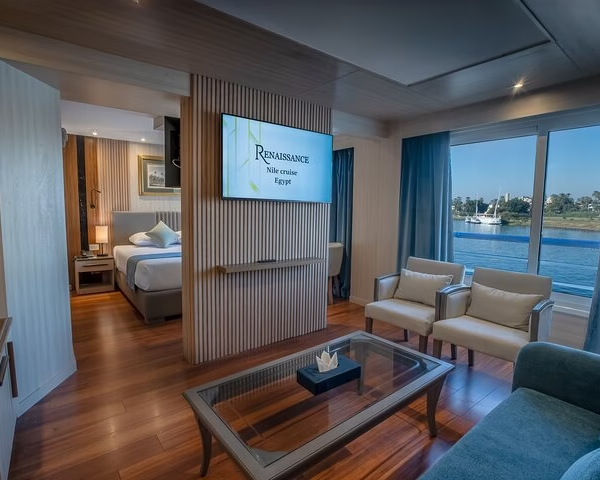
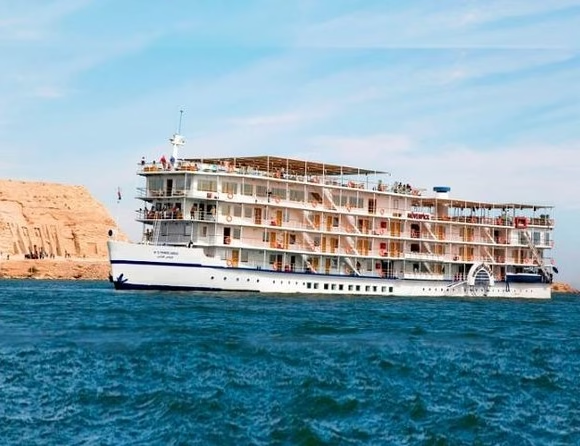
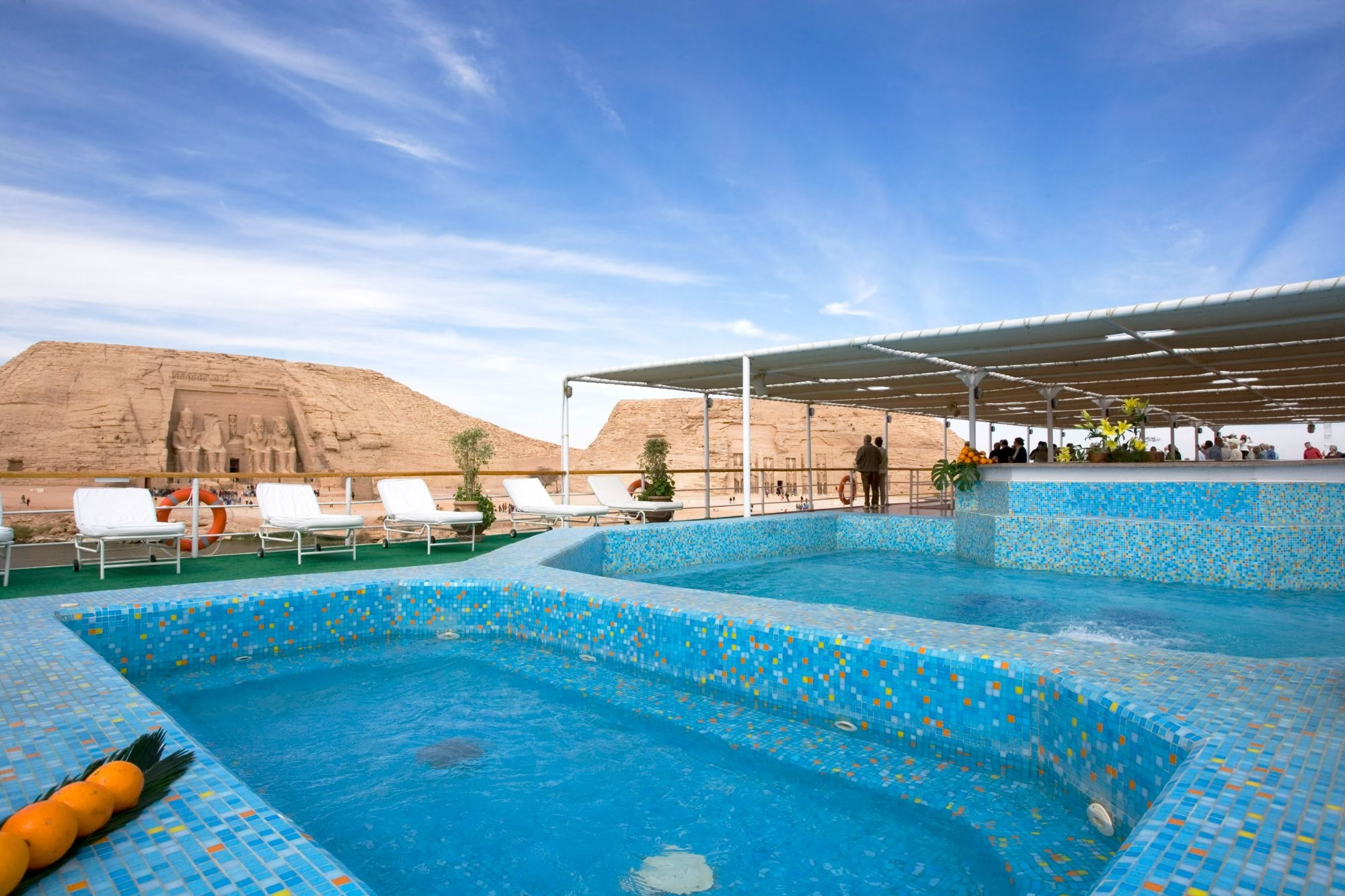
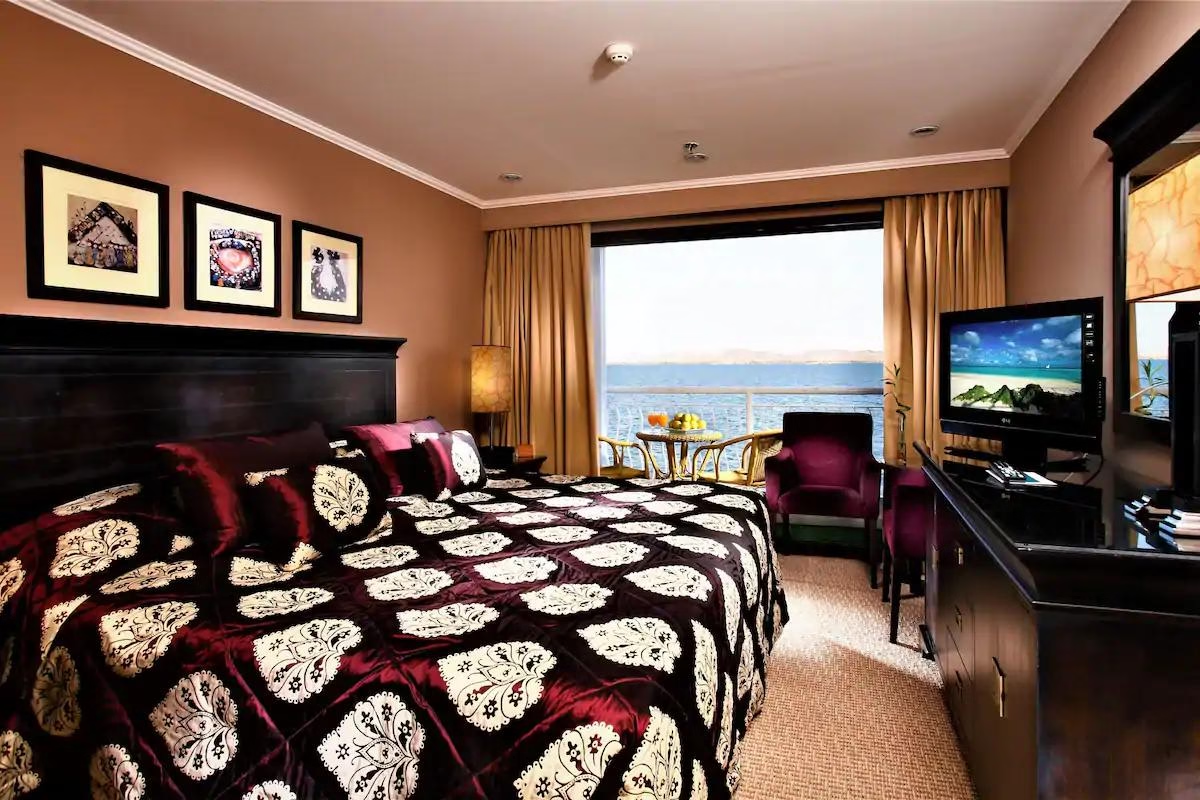
You will be warmly welcomed today for your 4-day Nile cruise from Abu Simbel to Aswan aboard the MS Nubian Sea at Aswan Airport by our tour guide, then you will have a private transfer to Abu Simbel. There, you will embark on your 5-star Nile cruise ship.
After lunch on board, you will visit the highlight of Lake Nasser with your tour guide, the legacy of Ramses II:
Abu Simbel Temples
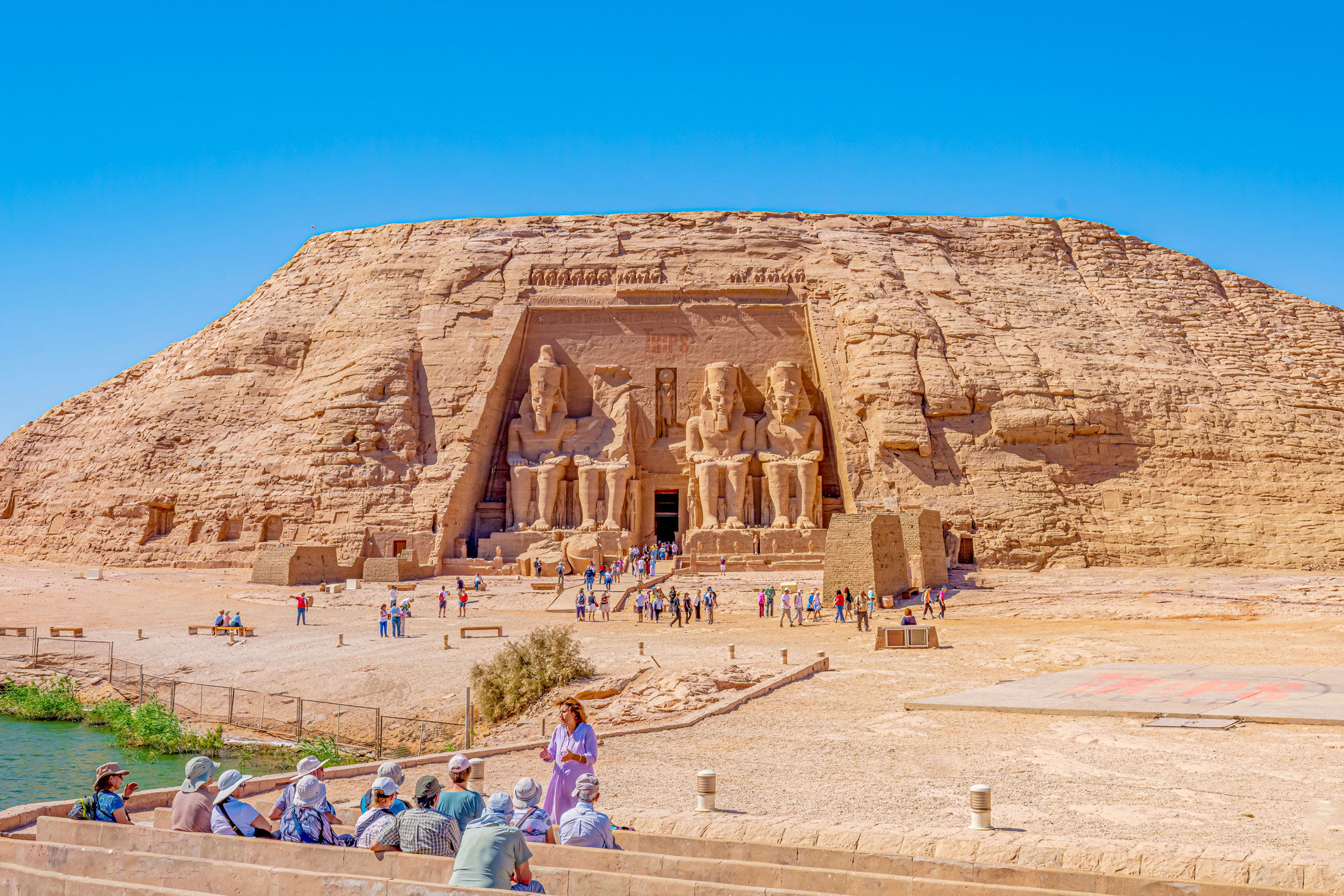
The two temples of Abu Simbel were built by Ramses II in 1260 BC and were buried under the sand until 1817 when the Italian Belzoni cleared them from the sand. The Ramses Temple extends 60 meters directly into the rock and is 30 meters high. The temple of Nefertari is 21 meters deep and 12 meters high. After the construction of the dam, both temples were moved approximately 62 meters higher between 1964 and 1968 to protect them from flooding by the reservoir.
Enjoy your first evening on board under the starry sky of Upper Egypt and look forward to the program of the next few days.
Tip of the day: In the evening, you have the opportunity to enjoy the impressive sound and light show at the temples of Abu Simbel. (optional).
Your dream Nile cruise begins in the morning as the ship heads towards Wadi el Seboua to Amada. During the journey, you can admire the former fortress of Kasr Ibrîm from the sun deck, the only archaeological site not buried by the waters of Lake Nasser.
The ship docks in Amada and as the first part of the day’s program, you will visit with your tour guide:
Temple of Amada – The Oldest Treasure on Lake Nasser
The Temple of Amada, carved from sandstone, is the oldest standing monument on Lake Nasser. It was built during the reigns of Thutmose III, Amenophis II, and Thutmose IV of the 18th Dynasty, and dedicated to the sun gods Amun-Re and Re-Harakhte. Renowned for its exquisite and well-preserved reliefs, it is considered one of the most beautifully decorated temples in Lower Nubia. To protect this ancient masterpiece from the rising waters of Lake Nasser, a remarkable engineering effort was made: the entire temple was moved intact to its new location, preserving its fragile artwork for future generations.
After that, you will visit:
Temple of Derr – Ramses II in the House of Re
Commissioned in the 30th year of Ramses II’s reign, the Temple of Derr stands as a tribute to the gods Ptah and Amun—and to Ramses II himself, honored as a deified ruler. Known in ancient times as the “Temple of Ramses in the House of Re,” this rock-cut sanctuary was originally carved into a cliff along the Nile. Today, what remains includes two colonnaded halls leading to the inner sanctuaries, still echoing the grandeur of the New Kingdom and the divine legacy of one of Egypt’s greatest pharaohs.
As the last item on the agenda of the day, you visit:
Tomb of Pennut – The Last Legacy of Ancient Aniba
The rock-cut Tomb of Pennut is a unique survivor of the ancient fortress town of Aniba, once known as Miam. It is the only monument from this site that was not surrendered to the rising waters of Lake Nasser. Pennut, a high official during the reign of Ramses VI, is honored here through a wealth of inscriptions and vivid wall scenes that reveal his prestigious role in the administration of Nubia. The tomb stands as a rare and invaluable testament to the lives of elite officials during Egypt’s 20th Dynasty.
Afterwards, this impressive day ends and you will be taken back to the ship.
After a leisurely breakfast on board, you will visit Wadi El Seboua with your tour guide:
Temple of Wadi El Seboua – The Valley of the Sphinxes
Once located in the so-called Valley of the Lions—a name inspired not by wild animals but by the sphinx statues lining its approach—the Temple of Wadi El Seboua is one of the few Nubian temples to preserve such monumental guardians. Built by Ramses II from sandstone, the temple was partially flooded during parts of the year before its relocation. Inside, visitors can admire striking depictions of the pharaoh in various divine forms: as a sphinx, a god in human shape, and a mighty king. The temple is dedicated to the powerful deities Amun-Re and Re-Harakhte, echoing the religious devotion of ancient Egypt’s New Kingdom.
Afterwards, you visit the:
Temple of Dakka – Sanctuary of Thoth, God of Wisdom
The Temple of Dakka, though relatively young in comparison to other ancient monuments, was built around 200 BC by the Meroitic king Arqamani during the Ptolemaic period. Dedicated to Thoth—the god of wisdom, writing, magic, and science—the temple served as a center of intellectual and spiritual reverence. Though impressive in scale, the temple was never fully completed, as evidenced by the unfinished pylons and unsmoothed reliefs. Even in its incomplete state, the Temple of Dakka stands as a remarkable testament to the fusion of Nubian and Greco-Egyptian artistry.
Temple of Meharrakka
Meharrakka was a place in Lower Nubia south of Aswan on the west bank of the Nile. At this location stood a temple dedicated to the deities Serapis and Isis. It was built in Roman times but never properly completed. Only the porch surrounded by covered colonnades on three sides remains of the temple. A unique feature found here is a spiral staircase that once led to the roof. The temple was dismantled together with the temple of Dakka due to the threat of flooding from the construction of the dam and was restored and rebuilt in (New) Wadi El Seboua. The temple has been on the UNESCO World Heritage List since 1979.
After the visit, the ship heads towards Aswan where it docks. Dinner and overnight on board.
After breakfast on board, disembarkation takes place, then as the last part of your Nile cruise, you will visit Kalabsha. The city was known in antiquity as Talmis and was flooded by Lake Nasser following the construction of the Aswan Dam, so it was relocated and reconstructed on an island.
In Kalabsha, you will visit with your tour guide:
Kalabsha Temple – A Monument of Many Eras
The majestic Kalabsha Temple, originally dedicated to the Nubian sun god Mandulis and the goddess Isis, stands as the largest free-standing temple complex of Lower Nubia, measuring an impressive 36 by 72 meters. Reconstructed by Emperor Augustus, the temple reflects a blend of Roman and ancient Egyptian architectural influence. In the 6th century AD, parts of the temple were repurposed as a Christian church, a transformation still visible today through the preserved Christian symbols carved into its walls.
Right next to the temple is the:
Kiosk of Kerkassi
The Kiosk of Kertassi is an ancient Egyptian temple building dating from the Greco-Roman period. Originally, it stood at the entrance to an ancient quarry in Kertassi, a place that was then a Roman outpost in Nubia. After the flooding of the site due to the construction of the high dam, the kiosk was moved near the Mandulis Temple, which was also relocated. Both buildings have been on the UNESCO World Heritage List since 1979.
After the last part of the program, you will be taken to Aswan Airport.
Calendar & Price
4 Days from Abu Simbel to Aswan Nubia sea
4 Days from Abu Simbel to Aswan Nubia sea
4 Days from Abu Simbel to Aswan Nubia sea
4 Days from Abu Simbel to Aswan Nubia sea
4 Days from Abu Simbel to Aswan Nubia sea
4 Days from Abu Simbel to Aswan Nubia sea
4 Days from Abu Simbel to Aswan Nubia sea
4 Days from Abu Simbel to Aswan Nubia sea
4 Days from Abu Simbel to Aswan Nubia sea
4 Days from Abu Simbel to Aswan Nubia sea
4 Days from Abu Simbel to Aswan Nubia sea
4 Days from Abu Simbel to Aswan Nubia sea
4 Days from Abu Simbel to Aswan Nubia sea
4 Days from Abu Simbel to Aswan Nubia sea
4 Days from Abu Simbel to Aswan Nubia sea
4 Days from Abu Simbel to Aswan Nubia sea
4 Days from Abu Simbel to Aswan Nubia sea
4 Days from Abu Simbel to Aswan Nubia sea
4 Days from Abu Simbel to Aswan Nubia sea
4 Days from Abu Simbel to Aswan Nubia sea
4 Days from Abu Simbel to Aswan Nubia sea
4 Days from Abu Simbel to Aswan Nubia sea
4 Days from Abu Simbel to Aswan Nubia sea
4 Days from Abu Simbel to Aswan Nubia sea
4 Days from Abu Simbel to Aswan Nubia sea
4 Days from Abu Simbel to Aswan Nubia sea
4 Days from Abu Simbel to Aswan Nubia sea
4 Days from Abu Simbel to Aswan Nubia sea
4 Days from Abu Simbel to Aswan Nubia sea
4 Days from Abu Simbel to Aswan Nubia sea
4 Days from Abu Simbel to Aswan Nubia sea
4 Days from Abu Simbel to Aswan Nubia sea
4 Days from Abu Simbel to Aswan Nubia sea
4 Days from Abu Simbel to Aswan Nubia sea
4 Days from Abu Simbel to Aswan Nubia sea
4 Days from Abu Simbel to Aswan Nubia sea
4 Days from Abu Simbel to Aswan Nubia sea
4 Days from Abu Simbel to Aswan Nubia sea
4 Days from Abu Simbel to Aswan Nubia sea
4 Days from Abu Simbel to Aswan Nubia sea
4 Days from Abu Simbel to Aswan Nubia sea
4 Days from Abu Simbel to Aswan Nubia sea
4 Days from Abu Simbel to Aswan Nubia sea
4 Days from Abu Simbel to Aswan Nubia sea
What is included in the 4 Days from Abu Simbel to Aswan with Nubian Sea?
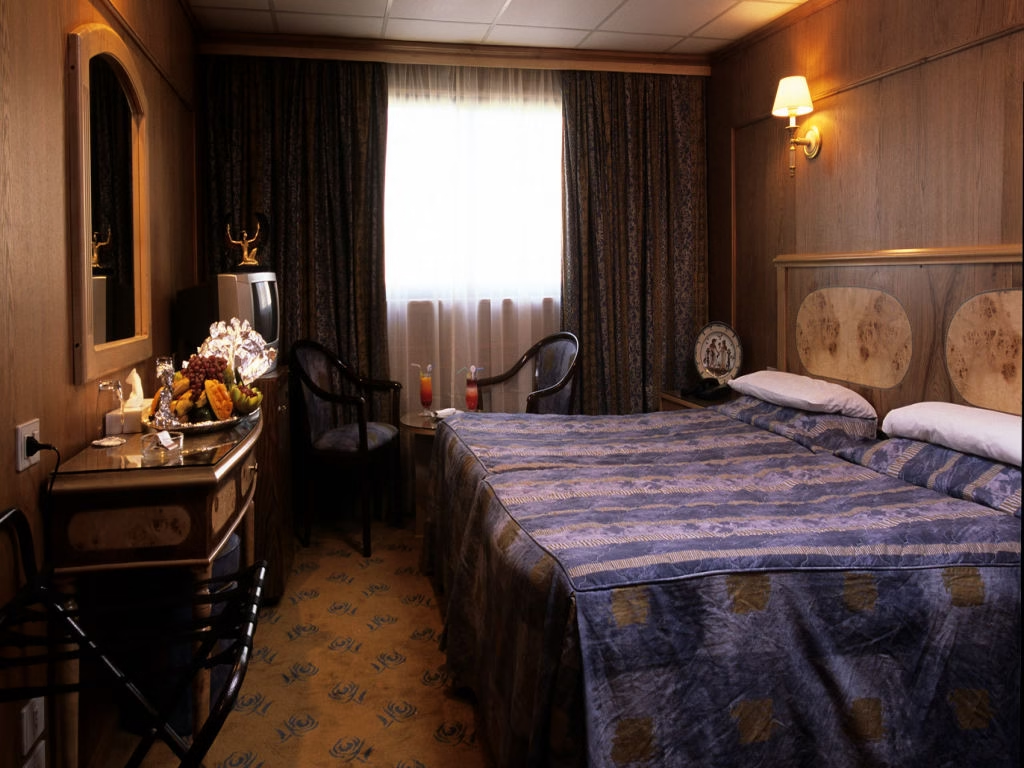
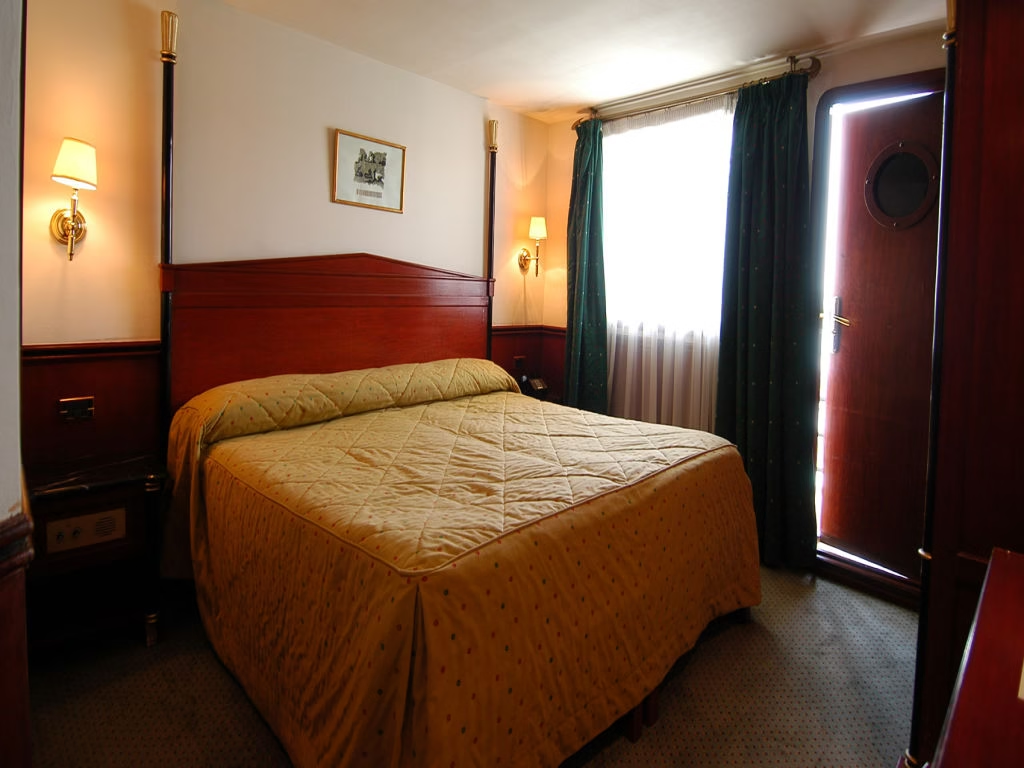
This tour includes meet-and-assist services, private transfers in a modern air-conditioned vehicle, and the guidance of a professional Egyptologist throughout your journey. You will enjoy comfortable accommodation in Aswan with daily breakfast included.
The package also covers entrance fees to key attractions such as the magnificent Abu Simbel Temples, the Philae Temple, and a relaxing experience along the beautiful Lake Nasser (Nubian Sea). Additionally, the tour includes bottled water during excursions, service charges, and all taxes, ensuring a smooth and enjoyable travel experience.
Review Scores
Frequently Asked Questions
What Is the Best Time for a Nile River Cruise in Egypt?
The best time to enjoy a Nile River Cruise in Egypt is between late October and mid-April, when the weather is pleasantly mild and ideal for sightseeing. This period offers the most comfortable climate for exploring ancient temples and cruising along the Nile without the intense summer heat. However, keep in mind that Christmas and Easter are considered peak seasons, with higher prices and increased demand. To enjoy a magical and affordable Nile cruise experience, it’s best to plan around these holidays—and with our tailored packages, you’ll always get the best value, no matter the season.
What Are the Best Prices for a Nile River Cruise in Egypt?
Sailing the Nile River is one of Egypt’s most unforgettable travel experiences, and there are a variety of Nile cruise options to suit every budget. The most popular and recommended categories are 5-star and 5-star High Deluxe Nile cruises, offering luxurious comfort, guided tours, and top-tier amenities. Prices vary depending on the cruise type, facilities, and travel season—especially during peak times like Christmas and Easter when rates are higher. For the best Nile River cruise prices and exclusive deals, explore our handpicked packages tailored to give you the perfect balance of quality and value.
What Are the Types of Egypt’s Nile River Cruises?
There are two main types of Nile River cruises in Egypt to choose from, depending on your travel style and preferences. The first is the private Dahabiya Nile cruise, a traditional sailboat offering an intimate experience with around 8 to 10 luxurious cabins, ideal for small groups or couples seeking privacy and elegance. The second and more common option is the standard large Nile cruise ship, which typically features 100 to 150 cabins, modern amenities, entertainment, and guided excursions. Both options provide unforgettable journeys along the Nile, with comfort and cultural discovery at their core.
What Are the Facilities on a Nile River Cruise?
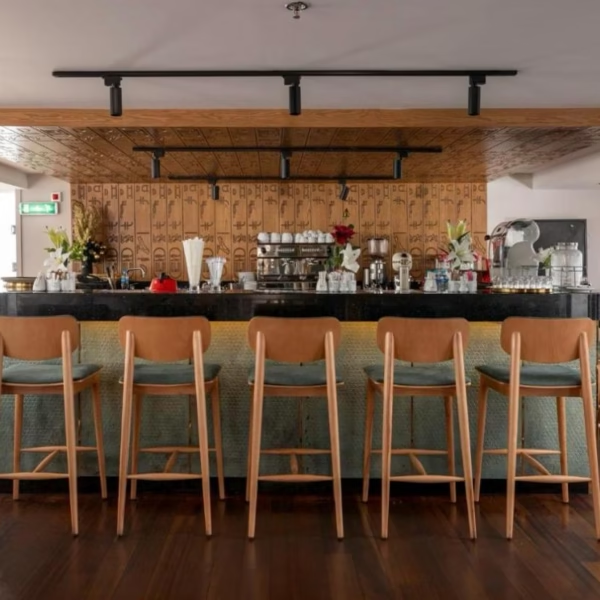
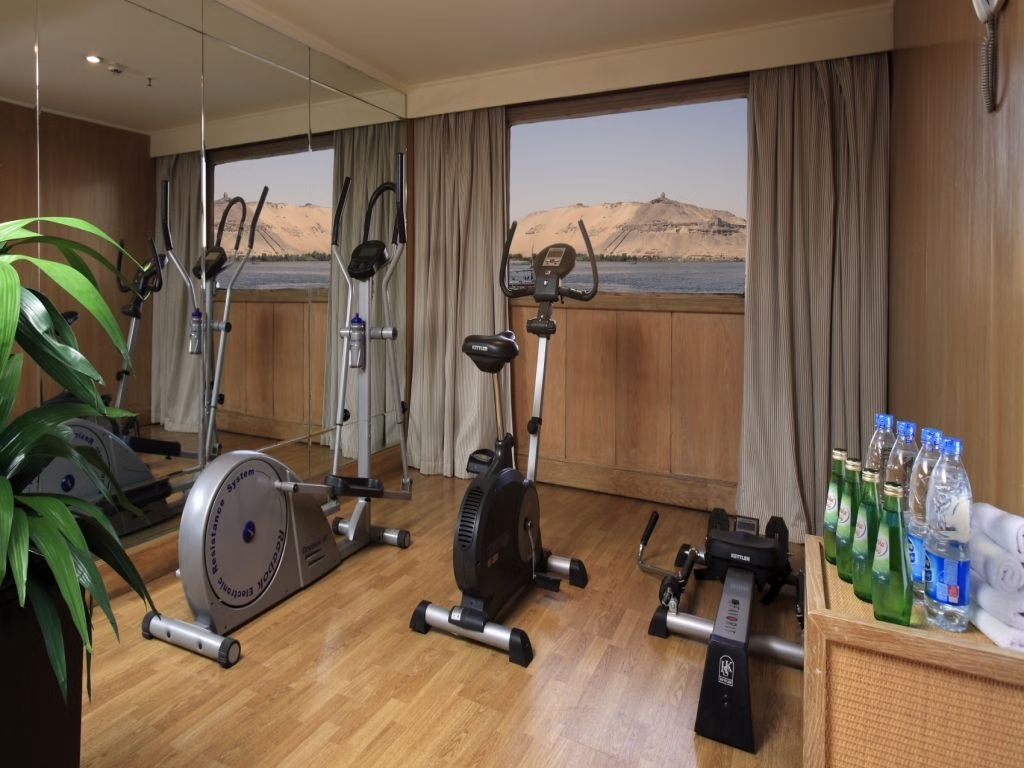
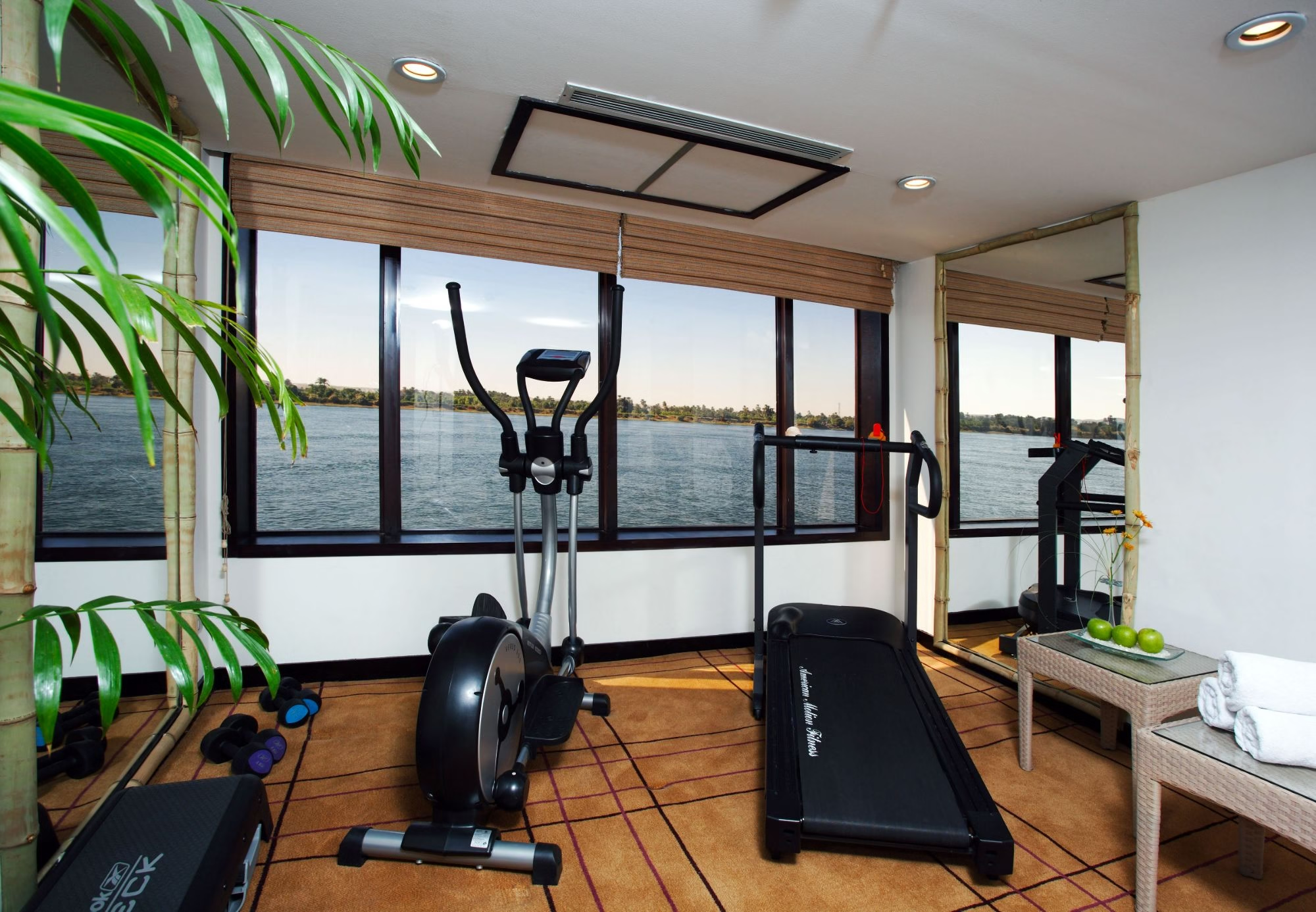
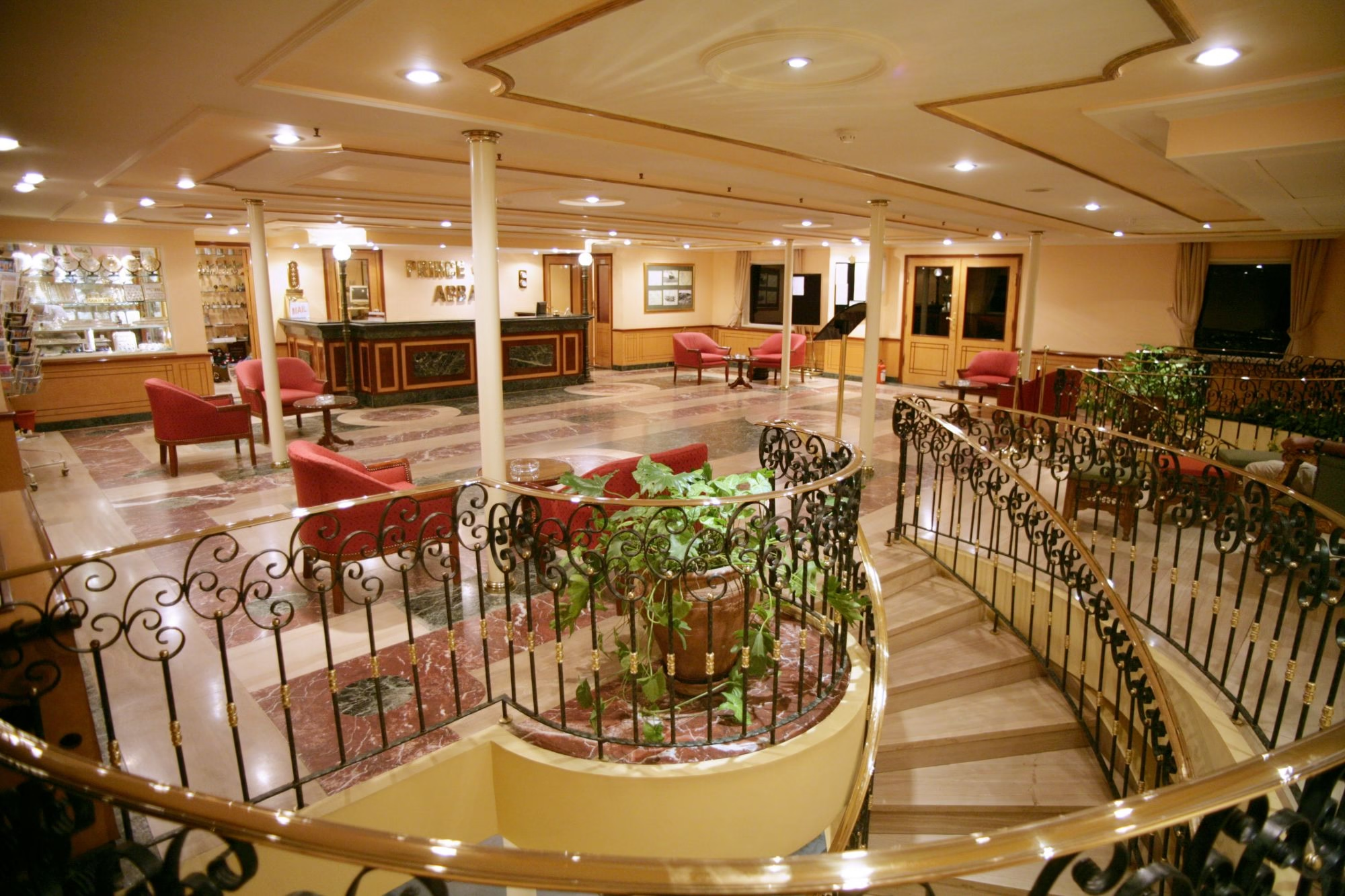
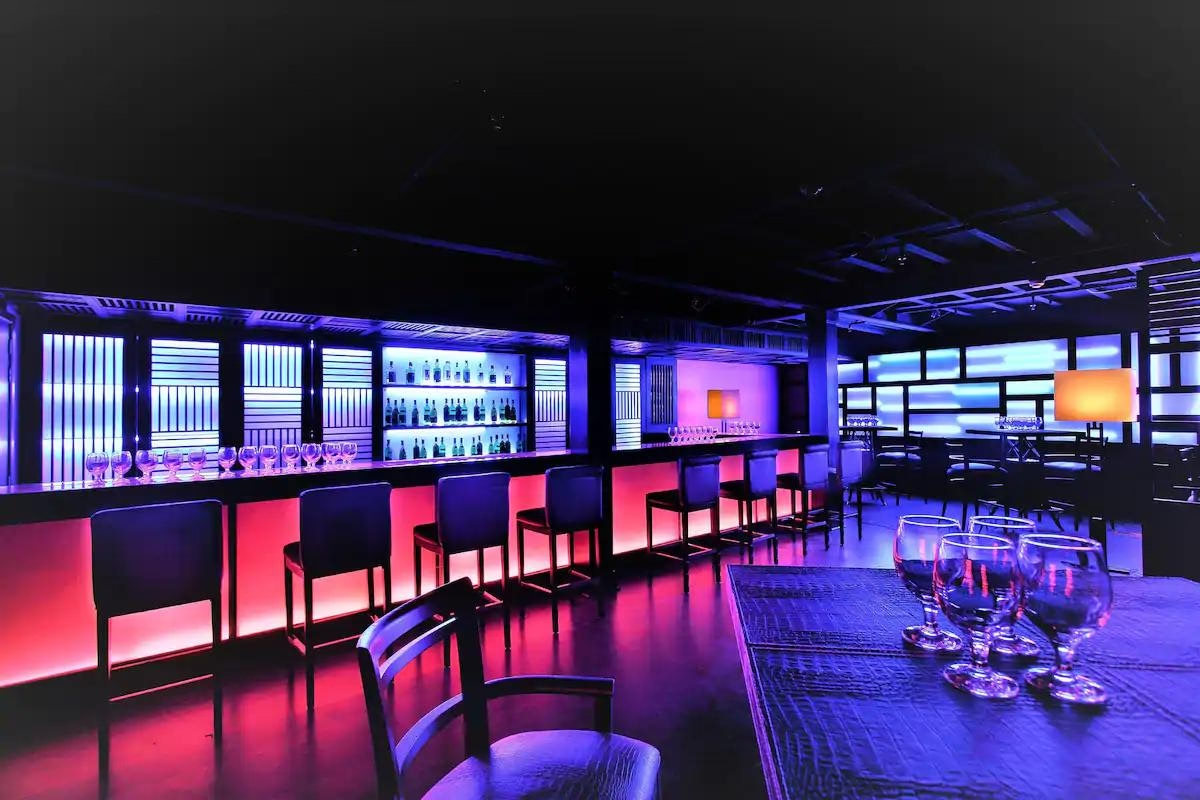
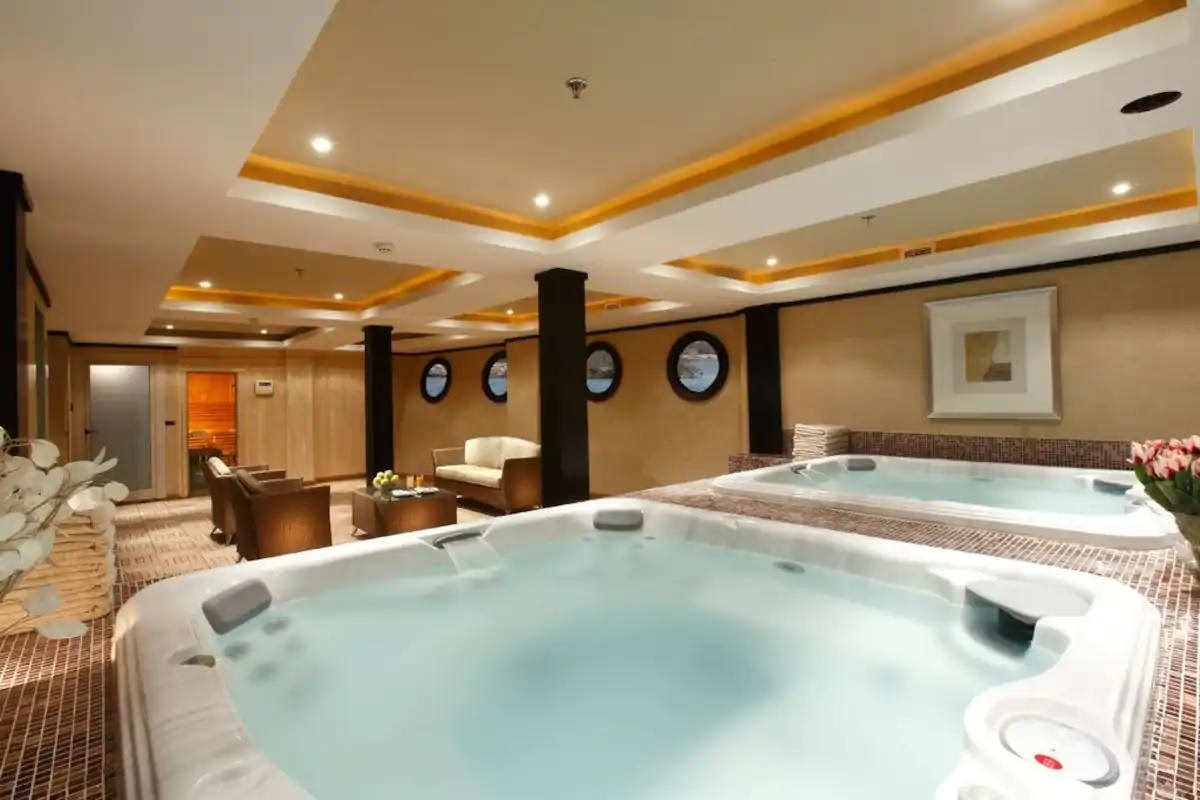
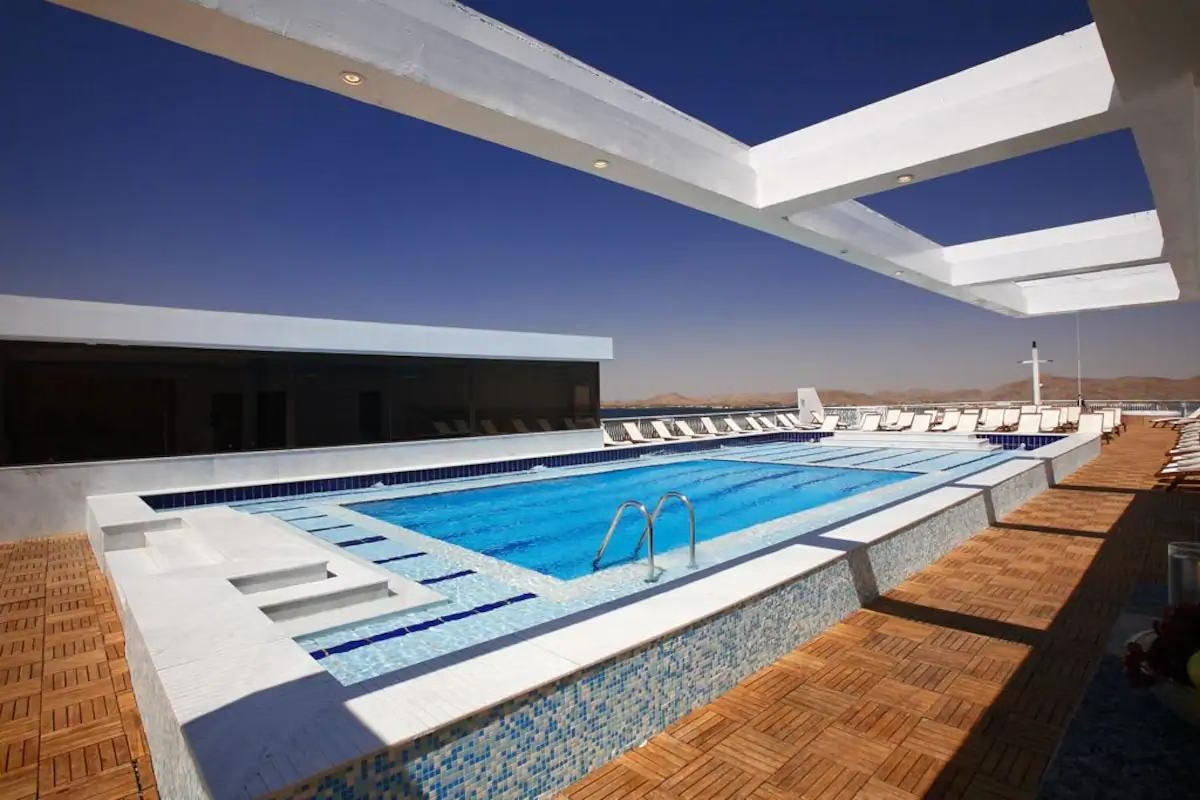
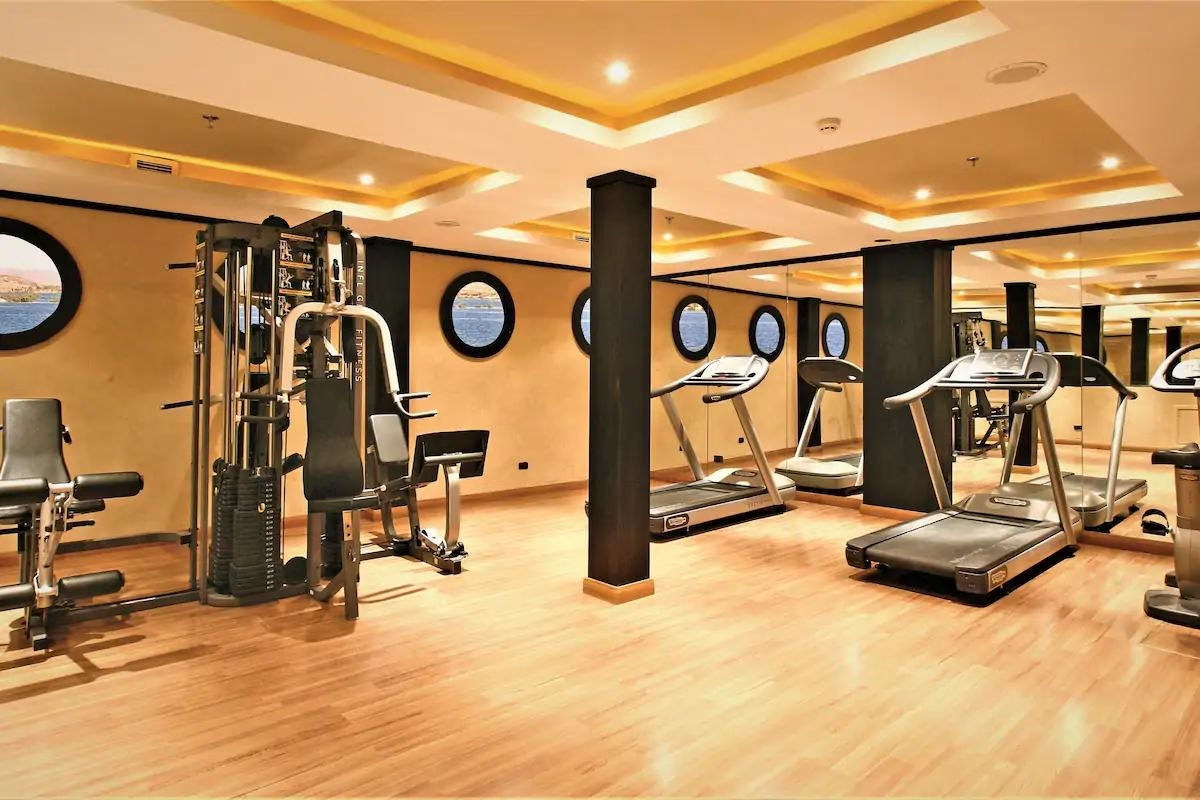
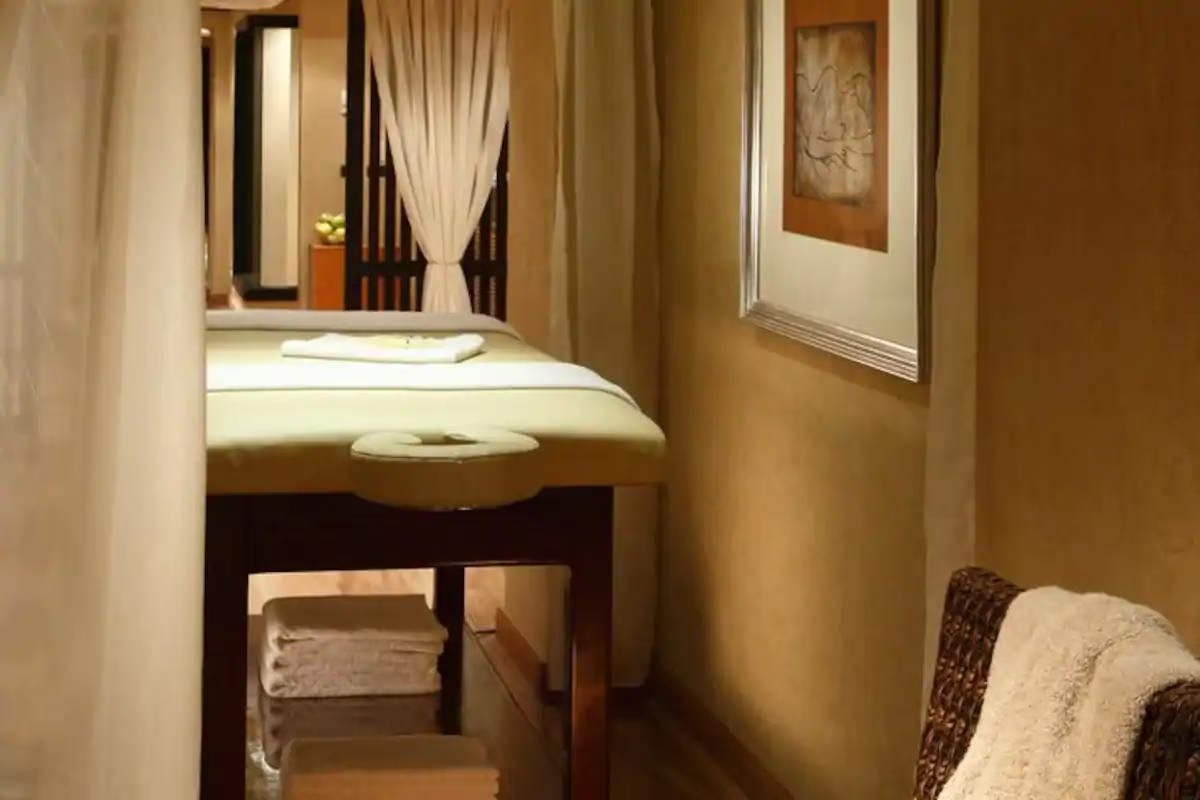
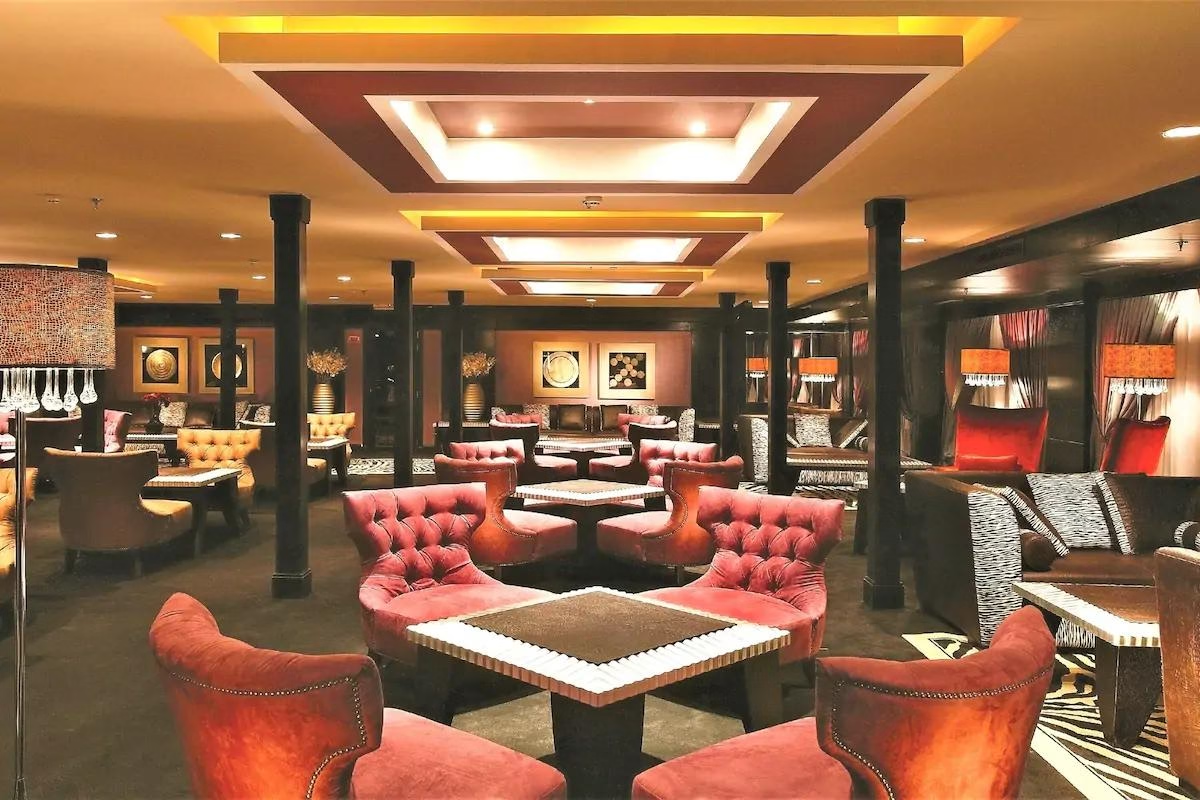
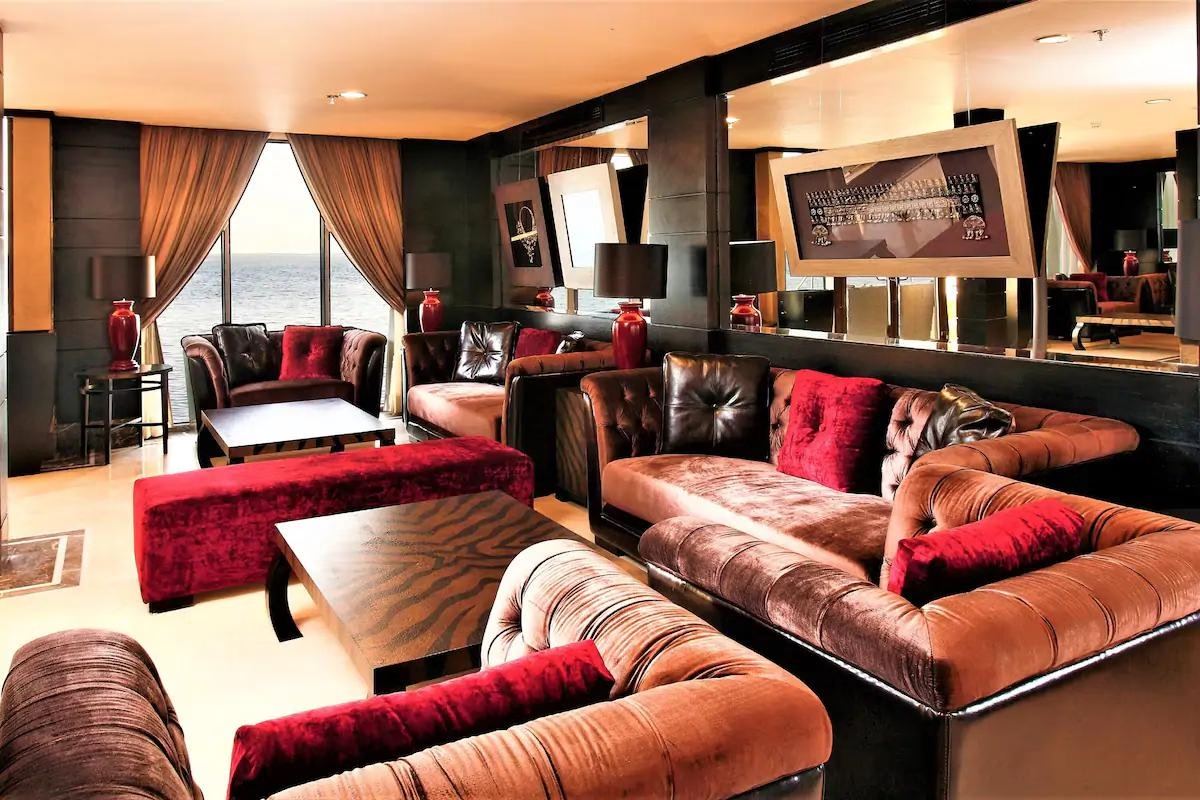
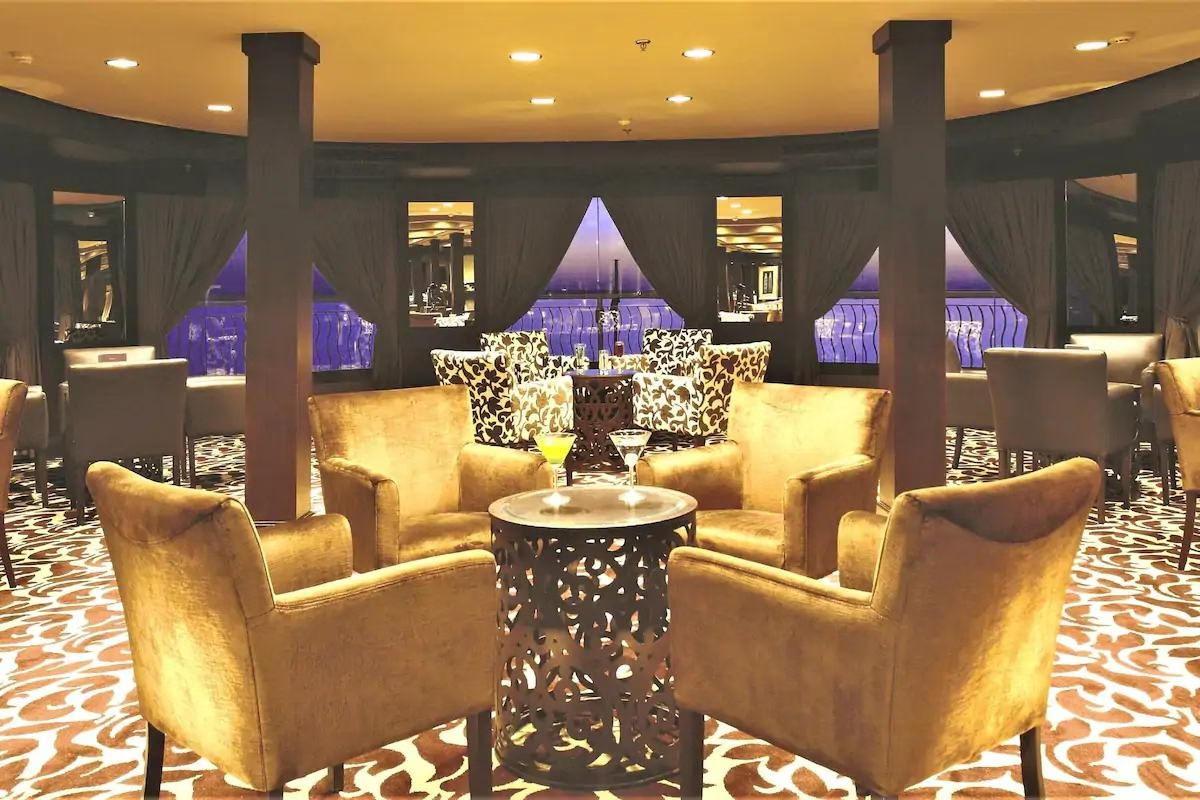
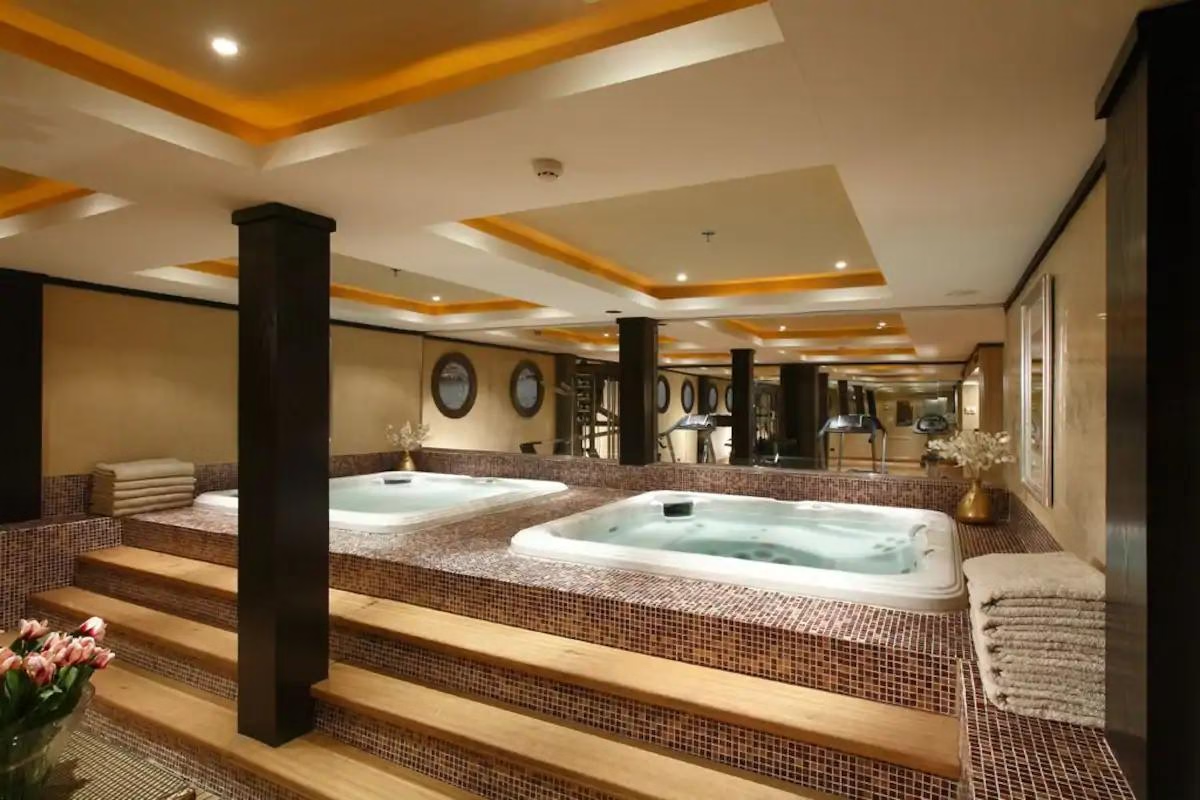
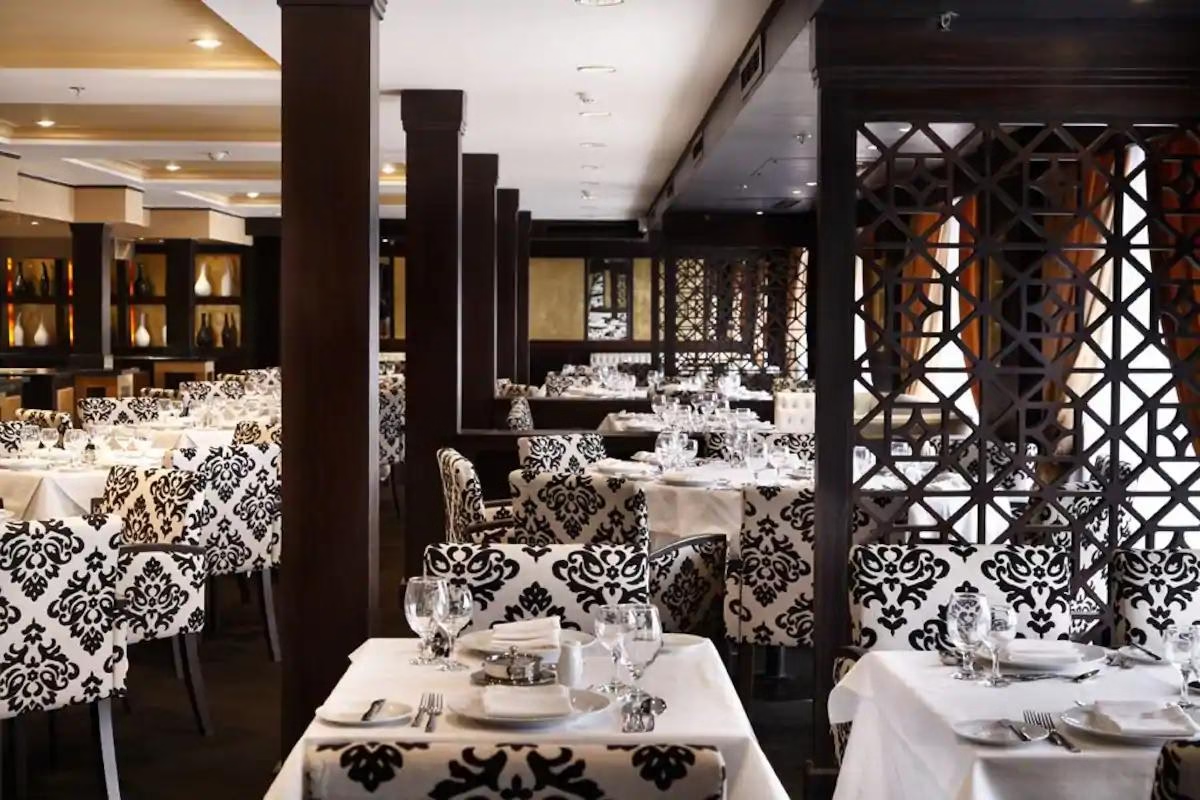
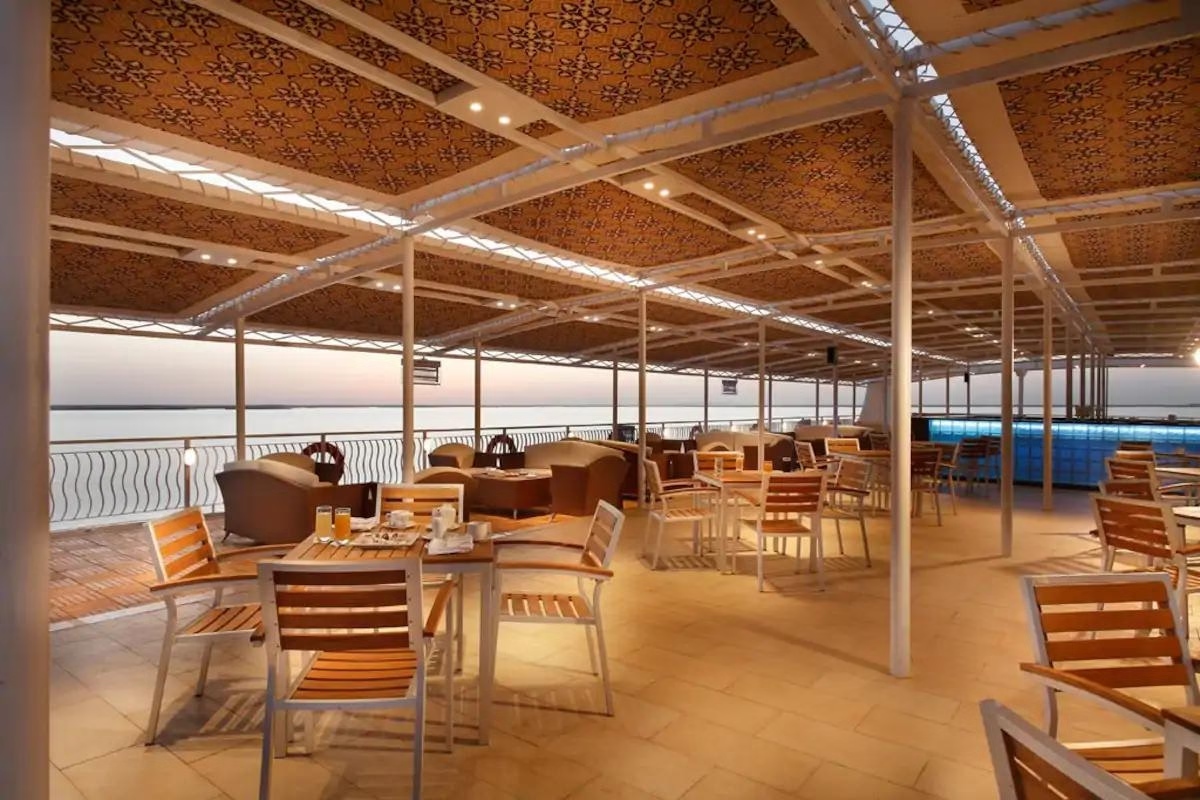
A luxury Nile River cruise in Egypt is essentially a fully equipped floating hotel, offering all the comfort and amenities you would expect from a 5-star resort. Onboard facilities typically include a sun deck with panoramic views, an indoor swimming pool, spa and beauty center, restaurant, lounge bar, discotheque, and even gift shops. Guests can also enjoy services like laundry, a safe deposit box, and a variety of entertainment options, ensuring a relaxing and enjoyable journey as you cruise between Egypt’s most iconic ancient landmarks.
What Are the Top Attractions to Visit on a Nile River Cruise?
A Nile River cruise between Luxor and Aswan (or vice versa) offers travelers the chance to explore some of Egypt’s most iconic ancient attractions. Highlights include the magnificent Karnak Temple Complex, the royal tombs in the Valley of the Kings, the elegant Temple of Hatshepsut, and the well-preserved Temple of Edfu dedicated to Horus. You’ll also visit the unique Kom Ombo Temple, the enchanting Philae Temple of Isis, and the impressive Unfinished Obelisk in Aswan. These landmarks reflect Egypt’s glorious past and make a Nile cruise a truly unforgettable journey through history.
What Are the Best Activities to Do in Egypt?
Egypt offers an incredible variety of activities for every traveler. One of the top experiences is sailing on a Nile River Cruise between Luxor and Aswan, exploring ancient temples along the way. For breathtaking views, enjoy a hot air balloon ride over Luxor or scenic aerial tours by plane. Dive into Egypt’s rich flavors by sampling authentic Egyptian cuisine and shopping in the bustling streets of Old Cairo. For adventure lovers, snorkeling and diving in the Red Sea—especially in resorts like Hurghada—offer a glimpse into vibrant marine life. Don’t miss the chance to embark on a desert safari in the Western Desert, where you can experience the magic of Egypt’s landscapes under star-filled skies.
What Are Egypt’s Festivals and Public Holidays?
Egypt celebrates a variety of public holidays and festivals, both religious and national. Among the most significant are the holy month of Ramadan, a time of fasting and spiritual reflection for Muslims, which ends with the joyful celebration of Eid Al-Fitr. Other major holidays include Eid Al-Adha, Islamic New Year, and Mawlid Al-Nabi (the Prophet’s birthday). On the national and cultural side, Christmas (January 7), New Year’s Eve, Revolution Day (July 23), and Sinai Liberation Day (April 25) are widely observed. These festivals offer visitors a rich cultural experience and a deeper look into Egypt’s heritage.
Is it safe to go on a tour in Egypt right now?
Egypt offers a wide range of tours to suit every travel style, interest, and budget. Some of the most popular options include a 6-day tour covering Cairo, Luxor, Aswan, and Abu Simbel; an 8-day package that explores Cairo, Luxor, Abu Simbel, and Hurghada; a 9-day journey combining Cairo, a Nile Cruise, and Alexandria; and a 10-day tour featuring Cairo, Aswan, Luxor, and Hurghada. Whether you’re drawn to ancient history, cultural landmarks, or relaxing by the Red Sea, there’s a tour perfectly tailored for you.
How Much a trip to Egypt costs?
Tour prices in Egypt vary based on length, comfort, and inclusions. Budget tours start around $600–$900 USD for a week, mid-range packages range from $1,000–$1,800, and luxury tours can exceed $2,000 USD. Prices usually include hotels, guided tours, and domestic transport, but not international flights.
What are the visa requirements for Egypt?
To visit Egypt, most travelers require a visa. Citizens from over 180 countries, including the U.S., UK, Canada, and EU nations, can apply for a 30-day tourist visa. This can be obtained either online via Egypt’s official eVisa portal or on arrival at Egyptian airports for a fee of approximately $25 USD. However, travelers heading to Sharm El Sheikh, Dahab, Nuweiba, or Taba resorts can enter visa-free for up to 15 days, here’s the www.visa2egypt.gov.eg
How long should my passport be valid to travel to Egypt?
Passport validity: Ensure your passport is valid for at least 6 months from your intended arrival date in Egypt.
What do I need to pack for my tour to Egypt?
You will need to pack lightweight, breathable clothing, a hat, sunglasses, sunscreen, comfortable walking shoes, a reusable water bottle, a scarf or shawl (for sun and temple visits), and a basic first aid kit. Don’t forget your passport, travel documents, and any personal medications.
What is the best time to visit Egypt?
The best time to visit Egypt is during the cooler months from October to April, when temperatures are mild and comfortable for sightseeing. Avoid the peak summer months (June to August) as it can get extremely hot, especially in desert and southern regions.
Booking Tour
Last Minute Deals