If you are planning a trip to Luxor, Karnak Temple is an unmissable highlight and one of the most impressive ancient sites in Egypt. Known as the world’s largest religious temple complex, Karnak was built over more than 2,000 years and remains a breathtaking symbol of ancient Egyptian civilization, power and architectural genius.
Why Visit Karnak Temple?
Karnak is not just a temple. It is an enormous open-air museum that showcases the legacy of pharaohs, gods and ancient Egyptian culture. From its towering columns to its sacred lake and beautifully carved hieroglyphs, every part of the complex reveals a piece of history.
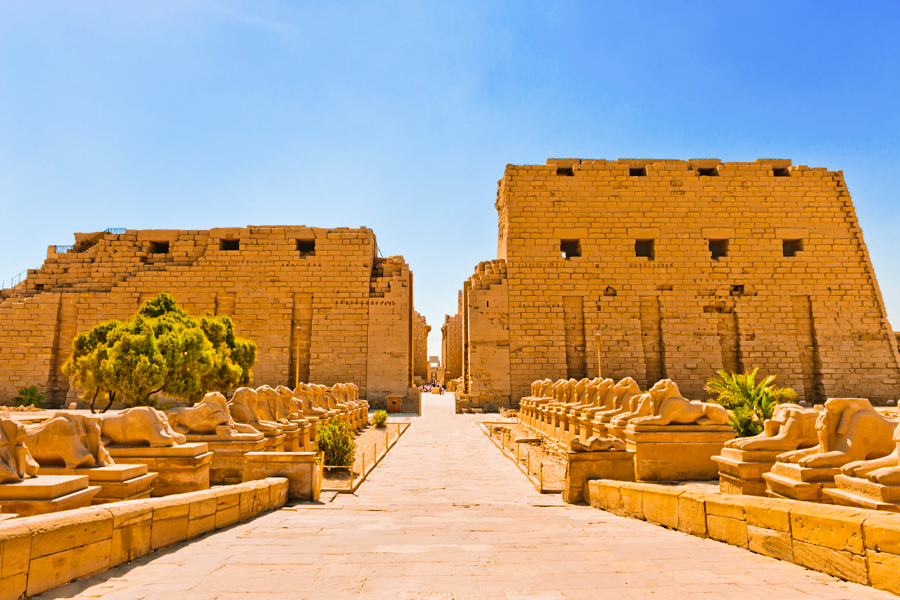
Visitors come to Karnak to explore the Great Hypostyle Hall, walk through the Avenue of Sphinxes, see ancient sanctuaries and obelisks, and enjoy the evening Sound and Light Show that tells the temple’s story in a dramatic way.
A Brief History of Karnak Temple
Karnak Temple, known in ancient times as Ipet-Isut, meaning “The Most Sacred of Places,” was dedicated mainly to the Theban Triad: Amun-Ra, Mut and Khonsu. Construction began during the Middle Kingdom around 2000 BC and continued through to the Ptolemaic period.
More than 30 pharaohs added to Karnak Temple, making it one of the most expanded and historically rich religious complexes in the world. Some of the most important contributors include:
Thutmose I and Thutmose III, who added pylons and obelisks
Queen Hatshepsut, who built her famous obelisks
Seti I and Ramses II, who built and decorated the Great Hypostyle Hall
Karnak offers visitors a clear timeline of ancient Egypt’s development in architecture, religion and art.
Main Highlights Inside Karnak Temple
The Great Hypostyle Hall
One of the most famous structures in Egypt, featuring 134 giant columns arranged in 16 rows. Standing here feels like entering a forest of stone.
The Sacred Lake
A peaceful lake used by ancient priests for purification rituals. It offers beautiful reflections and is particularly photogenic at sunrise or sunset.
The Obelisks of Queen Hatshepsut
Two grand granite obelisks, one of which still stands at almost 30 meters high, showing the strength and engineering skills of ancient Egyptians.
The Avenue of Sphinxes
A long processional road lined with sphinx statues that once linked Karnak Temple to Luxor Temple. Today, a restored section can be visited and walked through.
The Temples of Khonsu and Mut
Smaller temples inside the Karnak complex that contain detailed carvings, offering quieter areas to explore and appreciate ancient inscriptions.
Best Time to Visit Karnak Temple
Early morning is the best time to visit to avoid crowds and enjoy cooler weather. Late afternoon light adds warmth to the stone carvings, making it ideal for photography. In the evening, the Sound and Light Show brings the temple’s history to life in a unique atmosphere.
Tips for Visiting Karnak Temple
Wear comfortable walking shoes as the complex is large.
Carry water, sunscreen and a hat, especially during warmer months.
Consider hiring an expert tour guide for a deeper understanding of the history.
Many travellers combine Karnak Temple with a visit to Luxor Temple on the same day.
Where is Karnak Temple Located?
Karnak Temple is located on the East Bank of Luxor, just a short drive from the city center. It is easily reached by taxi, private car, guided tours or even a traditional horse-carriage ride.
Final Thoughts
Karnak Temple is one of the most impressive archaeological sites in the world and a must-see for anyone visiting Egypt. It offers a powerful journey into the heart of Egypt’s ancient history, culture and architecture. Whether this is your first time in Egypt or you are returning to explore more, a visit to Karnak Temple is a truly unforgettable experience.